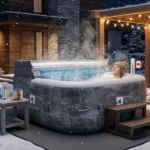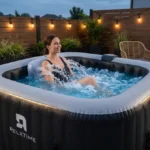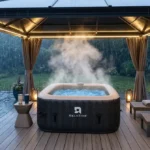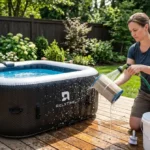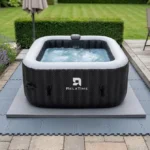
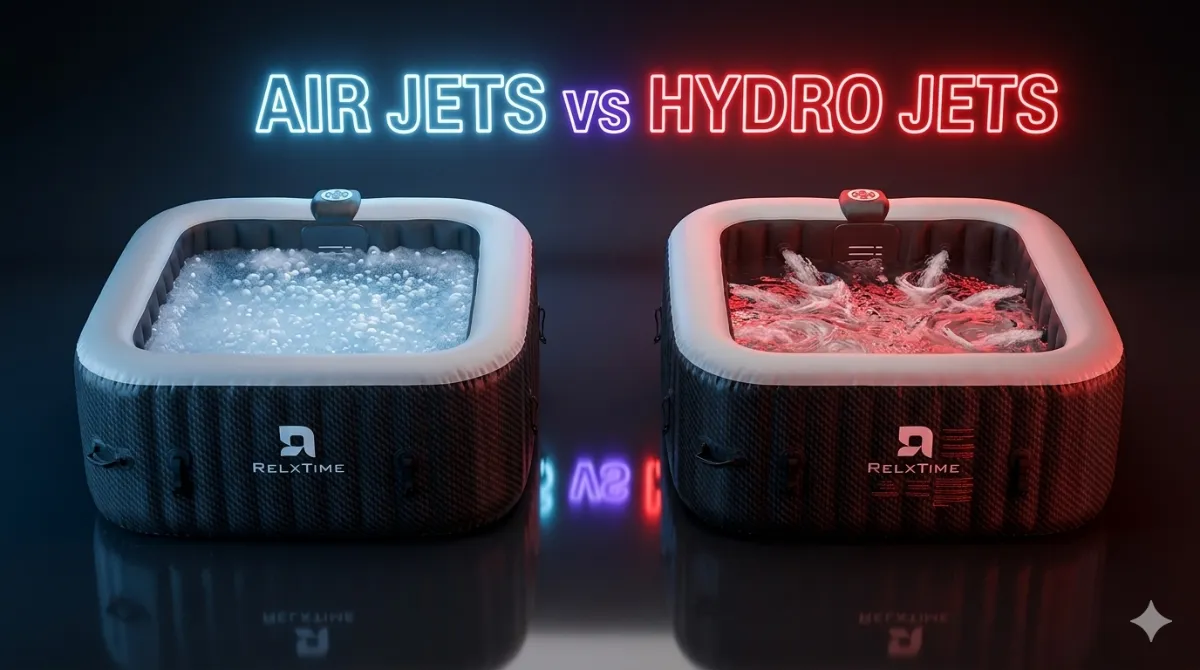
If you’ve ever sat in a portable spa and felt thousands of tiny bubbles rising all around your body, that was an air jet spa system at work.Air jet system in inflatable hot tubs through small holes built into the floor and walls of the tub. The result is a soft, full-body bubble massage that wraps around you from every direction.
Most inflatable hot tubs on the Canadian market, including popular models available at Relxtime, use this AirJet™ system. It’s the standard for a reason. Setup is simple, the pumps are quieter, and maintenance stays minimal. You rinse your filter cartridge every couple of days and you’re good to go.
What it feels like: think of it less like a sports massage and more like sitting in warm, fizzing water that gently works through surface tension and stress. After a long week in a Canadian winter, that’s often exactly what the body is asking for.
One honest limitation worth knowing air jets do cool the water slightly faster than hydro jet systems. The air being pushed through is room temperature, which means your heater works a bit harder to maintain 104°F (40°C). A good EnergySense® insulated cover goes a long way toward offsetting this.
What Are Hydro Jets in an Inflatable Hot Tub?
Hydro jets work differently. Instead of pushing air, they pump water through directional nozzles at high pressure. That targeted stream of water can be aimed at specific muscle groups your lower back, your shoulders, your calves. If you’re dealing with chronic back pain, post-workout soreness, or tight muscles, the hydrotherapy benefits of a hydro jet system are noticeably stronger.
An inflatable hot tub with hydro jets is harder to find than an air jet model, and that’s partly a design challenge. Getting water pressure high enough for a real HydroJet Pro™ massage in a portable, inflatable structure requires more engineering. That’s why these models sit at a higher price point and are typically classified as premium inflatable hot tubs.
For Canadians who use their spa therapeutically not just for relaxation the upgrade can be worth it. Hydrotherapy for muscle recovery, improved circulation, and stress relief is well-documented, and directional jets deliver that therapy more precisely than bubble systems can.
Air Jets vs Hydro Jets: The Core Differences ?
The comparison below covers what actually matters when you’re deciding between the two spa jet systems:
Massage intensity: Air jets give you a gentle, all-around bubble effect soft and enveloping. Hydro jets deliver concentrated water pressure to specific spots. Neither is better in an absolute sense; it depends entirely on what you’re after.
Inflatable hot tub types and availability: Air jet models dominate the inflatable spa market.Inflatable hot tub features Hydro jet inflatables exist but represent a smaller, more premium category.
Energy use: Air jet pumps are generally quieter and less energy-intensive. Hydro jet pumps need more power to maintain water pressure, which can add slightly to your monthly energy cost worth considering if you’re running your spa through a Canadian winter.
Water temperature: Air jets can drop water temperature a few degrees faster. Hydro jets recirculate water rather than introducing cold air, so heat retention tends to be better.
Maintenance: Air jet systems are simpler to care for. Hydro jet nozzles and pipes need regular cleaning to prevent buildup not difficult, but more involved than a basic air jet setup.
Read more : Heat loss in hot tubs
How Many Jets Do You Need in a Hot Tub?
This is one of the most common questions buyers ask, and the honest answer is: more jets don’t automatically mean a better experience. A 120-jet air jet system can deliver a wonderfully relaxing soak. A 10-nozzle hydro jet setup aimed correctly at your lower back can be more therapeutic than 200 randomly placed air holes.
Focus on jet type first, jet count second. For general relaxation in a family-sized inflatable spa, 80 to 120 air jets is a solid range. For targeted therapy, even a small number of well-placed hydro jets can outperform a much larger air jet count.
Which Jet System Is Right for You?
Choose air jets if:
- You want relaxation and stress relief after a long day
- You’re buying your first inflatable hot tub and want a straightforward experience
- Budget matters and you want a reliable, lower-maintenance system
- You have kids or want a gentler soak for the whole family
Choose hydro jets if:
- You’re dealing with back pain, sore muscles, or need consistent hydrotherapy
- You’re willing to invest more for a therapeutic, targeted massage experience
- You’ve already owned an air jet spa and want to step up the intensity
At Relxtime, the inflatable hot tub comparison doesn’t have to be complicated. Both systems can deliver real value what changes is the kind of value they offer.
Read more : Muscle recovery hot tub benefits.
Conclusion
The air jets vs hydro jets debate doesn’t have a single right answer it has a right answer for you. Air jet systems are perfect for everyday relaxation, family use, and budget-conscious buyers. Hydro jet systems are the better pick for targeted muscle therapy and deeper hydrotherapy benefits.
For most Canadians shopping for a portable spa, an air jet inflatable hot tub hits the sweet spot of comfort, ease of use, and value. If therapeutic massage is the priority, look into premium inflatable hot tub models with hydro jet technology. Either way, the best spa is the one you’ll actually use and Relxtime is here to help you find exactly that.
Frequently Asked Questions?
Here are some frequently asked questions given below:
What is the main difference between air jets and hydro jets in an inflatable hot tub?
Air jets release bubbles through small holes in the tub walls and floor, creating a soft all-over massage effect. Hydro jets pump water through directional nozzles at higher pressure for targeted, deeper muscle relief. Air jets are gentler; hydro jets are more therapeutic.
Are hydro jet inflatable hot tubs worth it?
They can be, especially if you need hydrotherapy for back pain, sore muscles, or post-workout recovery. Hydro jet inflatables cost more and require slightly more maintenance, but the targeted massage experience is noticeably stronger than a standard air jet system.
Do air jets cool the water in an inflatable hot tub?
Yes, slightly. Air jets push room-temperature air into the water, which can lower the temperature a few degrees over time. Using an insulated cover like an EnergySense® liner helps maintain your target temperature and reduces heating costs.
How many jets do I need in an inflatable hot tub?
Jet count matters less than jet type. For relaxation, 80 to 120 air jets is more than enough. For therapy, a smaller number of well-placed hydro jets will outperform hundreds of air holes. Focus on what the jets do, not how many there are.
Can I use an inflatable hot tub with hydro jets outdoors in Canadian winters?
Yes, provided the model includes cold-weather features like Freeze Shield® auto-heating protection, which keeps the pump and liner safe in near-freezing temperatures. Always check the operating temperature range before running your spa in Canadian winter conditions.