If you own an inflatable hot tub in Canada, you already know the struggle cold nights, rising electricity bills, and a tub that takes forever to reheat in the morning. The good news is that keeping your hot tub warm overnight does not have to cost a fortune. At Relxtime, we help Canadian hot tub owners enjoy their spas smarter, not harder. In this guide, you will find practical, cost-effective ways to heat your hot tub overnight, reduce heat loss, and slash your energy bills without sacrificing comfort.
Why Heat Loss Is a Bigger Problem in Canada ?
Canada’s climate is one of the harshest for outdoor hot tub owners. Whether you live in British Columbia, Ontario, or Alberta, overnight temperatures can plunge well below zero for months at a time. Every degree your water loses overnight means more energy burned reheating the next morning. Understanding why your hot tub loses heat is the first step to fixing it.
Main Causes of Hot Tub Heat Loss
| Cause | Heat Loss Impact |
|---|---|
| No cover or thin cover | Very High |
| No insulation around tub walls | High |
| Low overnight ambient temperature | High |
| Incorrect temperature settings | Medium |
| Frequent lid removal | Medium |
| Dirty or clogged filters | Low to Medium |
Knowing these causes helps you target the right fixes and stop wasting energy night after night.
Ideal Temperature Settings for Overnight Hot Tub Use
One of the most common questions Canadian owners ask is: what is the best way to keep a hot tub warm at night without running the heater constantly? The answer lies in your temperature settings.
Do not turn your hot tub off overnight. Instead, lower the temperature slightly rather than letting it cool completely. Here is why reheating a cold tub from scratch uses far more energy than maintaining a warm one.
Recommended Overnight Temperature Guide
- Active use season (spring/summer): Set to 36°C overnight (saves energy while staying ready)
- Cold weather season (fall): Maintain at 38°C overnight
- Winter season (below -10°C): Keep at 38–40°C minimum never let it drop below 20°C
- Extended absence (1+ weeks): Set to 20°C with cover and insulation wrap in place
These ideal temperature settings for overnight hot tub use are the foundation of energy-efficient hot tub ownership in Canada.
How to Keep Your Hot Tub Warm Overnight: 8 Proven Methods ?
Never Skip the Hot Tub Cover
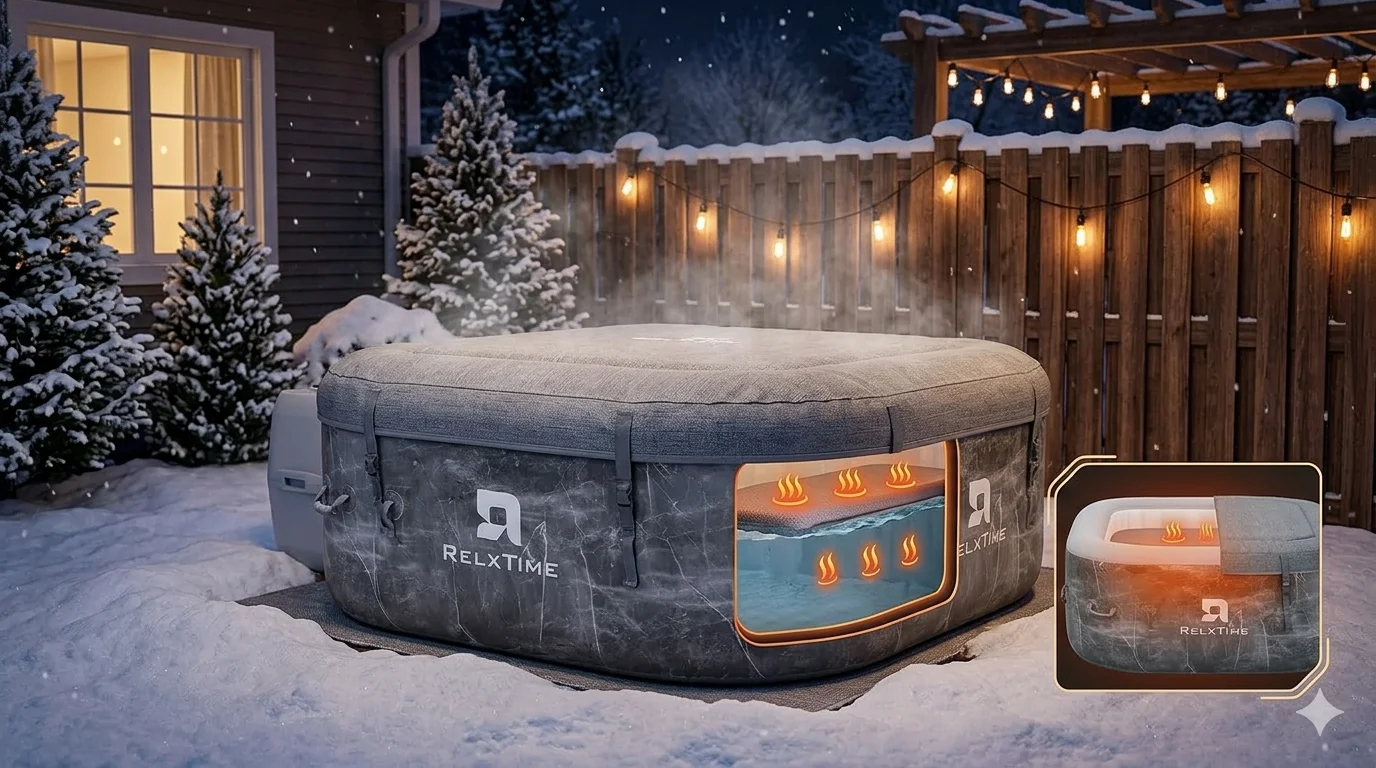
This is the single most effective hot tub heat preservation technique available. A well-fitted, high-density foam cover can reduce heat loss by up to 75%. If your inflatable hot tub came with a thin cover, consider upgrading to a thicker insulated lid. Always secure the cover completely after every soak even a small gap lets warm air escape rapidly during cold Canadian nights.
Add a Thermal Floating Blanket
When comparing hot tub cover vs thermal blanket effectiveness, the best results come from using both together. A floating thermal blanket sits directly on the water surface underneath your main cover. It acts as a second layer of insulation, trapping heat between the water and the lid. This combination is one of the most cost-effective ways to heat a hot tub overnight and can noticeably reduce your morning reheat time.
Wrap the Exterior with an Insulation Surround
Inflatable hot tubs lose a significant amount of heat through their walls, not just the surface. Learning how to reduce heat loss in an inflatable hot tub starts with insulating the outside. You can:
- Use a purpose-built hot tub surround or wrap
- Stack outdoor foam panels around the base and sides
- Position the tub in a sheltered corner of your yard, away from wind
This winter hot tub maintenance step alone can make a noticeable difference to your energy bills.
Position Your Hot Tub Strategically
Where your hot tub sits in your backyard matters more than most owners realise. Cold winds dramatically accelerate heat loss. For smart cold weather spa tips, consider:
- Placing your tub against a south-facing wall or fence to block prevailing winds
- Using a windbreak, privacy screen, or pergola as a shelter
- Avoiding open, exposed areas that catch full winter winds overnight
This is a free energy-saving tip for hot tub heating that costs nothing but a little planning.
Keep Your Filters Clean to Maintain Heating Efficiency
A dirty filter forces your pump to work harder and longer to circulate water, which slows heating and drives up electricity costs. As part of your winter hot tub maintenance routine, rinse your filter every one to two weeks and deep-clean it monthly. If you notice your hot tub heating up very slow, a clogged filter is often the first thing to check. Clean filters are a direct energy saving tip for hot tub heating that many owners overlook.
Use a Timer or Smart Schedule for Heating Cycles
Most inflatable hot tubs allow you to set heating cycles. Instead of running the heater continuously, schedule it to run during off-peak electricity hours typically late at night or early morning in most Canadian provinces. This approach to how to keep hot tub hot without high electricity cost can reduce your monthly energy spend without any drop in comfort.
Run Jets and Circulation Pump Minimally Overnight
Jets and the circulation pump consume electricity and can actually accelerate surface heat loss when running unnecessarily. Turn off the air jets overnight and allow the heater alone to maintain temperature. Save jet use for when you are actively soaking. This simple overnight habit is one of the most underrated energy saving tips for hot tub heating in Canada.
Top Up Water Levels Before Bed
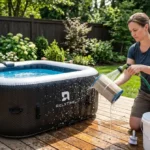
You may wonder how often do you need to top up your hot tub. The answer is weekly but doing it right before bed on a cold night is a mistake. Cold tap water added at night forces your heater to work overtime. Instead, top up your hot tub during the warmest part of the day, let the heater catch up, and then cover the tub securely before temperatures drop overnight. This small scheduling change protects your energy efficiency considerably.
Common Mistakes That Waste Hot Tub Energy
Even experienced owners fall into habits that cost them money every month. Here are the most common mistakes that waste hot tub energy and how to fix them:
- Turning the heater off completely overnight: Reheating from cold uses three to four times more energy than maintaining temperature. Always keep it running at a reduced setting.
- Leaving the cover loose or off: Even 10 minutes of open exposure on a cold night can drop water temperature by several degrees.
- Ignoring wind exposure: Wind chill strips heat from your tub rapidly. A simple windbreak can reduce heat loss by up to 30%.
- Using jets overnight: Air jets push cooler air into the water and accelerate evaporation. Switch them off when not soaking.
- Neglecting filter cleaning: A blocked filter makes your heater work harder and longer for the same result.
- Adding cold water at night: Always top up during daytime and allow the heater to recover before nightfall.
Avoiding these mistakes is the quickest way to improve your hot tub’s energy performance without spending anything.
How to Keep Your Hot Tub From Freezing in a Canadian Winter ?
One of the most serious cold weather concerns for Canadian owners is frozen equipment. Knowing how to keep your hot tub from freezing is non-negotiable if you plan to use it year-round. Here is a complete winter checklist:
- Keep the heater on at all times never fully power down in winter
- Maintain a minimum water temperature of 20°C even when not in use
- Always replace the cover after every use, no matter how brief
- Add a thermal blanket beneath the cover for extreme cold nights
- Wrap the tub exterior with an insulation surround or blanket
- Check for ice formation around jets and the pump daily during cold snaps
- If storing for winter, fully drain, dry, and bring the tub indoors
Knowing how long for a hot tub to heat up in winter helps with planning too. On average, an inflatable hot tub takes 12 to 24 hours to fully heat from cold in temperatures below -10°C. This is why maintaining temperature overnight is always more efficient than starting from scratch each morning.
Hot Tub Cover vs Thermal Blanket: Which Is Better?
This is one of the most frequent questions in Relxtime’s Canadian customer community. Here is a straightforward comparison:
| Feature | Hot Tub Cover | Thermal Floating Blanket |
|---|---|---|
| Primary function | Keeps debris and cold air out | Insulates the water surface directly |
| Heat retention | Good alone | Excellent when used together with cover |
| Cost | Medium to high | Low |
| Ease of use | Simple | Very simple |
| Best use | Year-round protection | Extra insulation in winter |
| Verdict | Essential never skip it | Highly recommended in cold weather |
The verdict is clear for Canadian winters, use both. Together they give you the best possible overnight heat retention at a very reasonable combined cost.
Conclusion
Keeping your hot tub warm overnight in Canada is all about layering smart habits. Use a quality insulated cover, add a thermal floating blanket, insulate the exterior, set the right overnight temperature, and avoid the common mistakes that drain your energy bill unnecessarily.
Whether you are managing your first winter with a hot tub or simply looking to reduce costs, these energy saving tips for hot tub heating will make a real difference month after month. At Relxtime, we are here to help every Canadian hot tub owner enjoy a warm, comfortable, and energy-efficient spa experience all year long.
Visit us at relxtime.ca to explore our full range of covers, insulation accessories, and inflatable hot tubs built for the Canadian climate.
Frequently Asked Questions?
Here are some frequently asked questions given below:
Should I turn my hot tub off overnight to save electricity?
No. Turning your hot tub off overnight is one of the most common mistakes that waste hot tub energy. Reheating a completely cold tub uses significantly more electricity than simply maintaining a slightly reduced temperature overnight. Always keep the heater running at a lower setting and use a good insulated cover to preserve heat.
How long should my hot tub take to heat up in winter?
On average, an inflatable hot tub takes between 12 and 24 hours to reach optimal temperature from cold during Canadian winter conditions. The exact time depends on the ambient temperature, your starting water temperature, and whether the tub is insulated. This is why maintaining heat overnight is always the smarter and more energy-efficient approach.
What is the best overnight temperature setting for a hot tub in winter?
For winter hot tub maintenance in Canada, we recommend keeping your hot tub set to a minimum of 38–40°C overnight when in regular use, and never below 20°C even during extended periods of non-use. These ideal temperature settings for overnight hot tub use protect your equipment from freezing while keeping reheating costs to a minimum.
Does a thermal blanket really help keep hot tub water warmer overnight?
Yes, absolutely. When comparing hot tub cover vs thermal blanket effectiveness, using both together delivers significantly better heat retention than a cover alone. A floating thermal blanket sits directly on the water surface and acts as a second layer of insulation. This combination is one of the most cost-effective ways to heat a hot tub overnight and reduces your morning warm-up time considerably.
How often do I need to top up my hot tub water in winter?
You should check your hot tub water level weekly. Water evaporates faster in winter due to the temperature difference between the water and the cold air. When you do need to top up, do it during the warmest part of the day rather than at night. Adding cold water at night forces your heater to work harder and undermines your overnight energy saving efforts.