When people think about keeping an inflatable hot tub warm, they usually focus on the heater power or the tub’s wall material. What rarely gets enough attention is the water surface itself the place where the most heat actually escapes.Heat loss.
Studies on spa energy loss consistently show that the water surface accounts for the majority of heat loss in any open or poorly covered hot tub. Steam rising off warm water carries heat away rapidly, especially on cold Canadian evenings when the temperature gap between your 40°C water and the air outside is enormous.
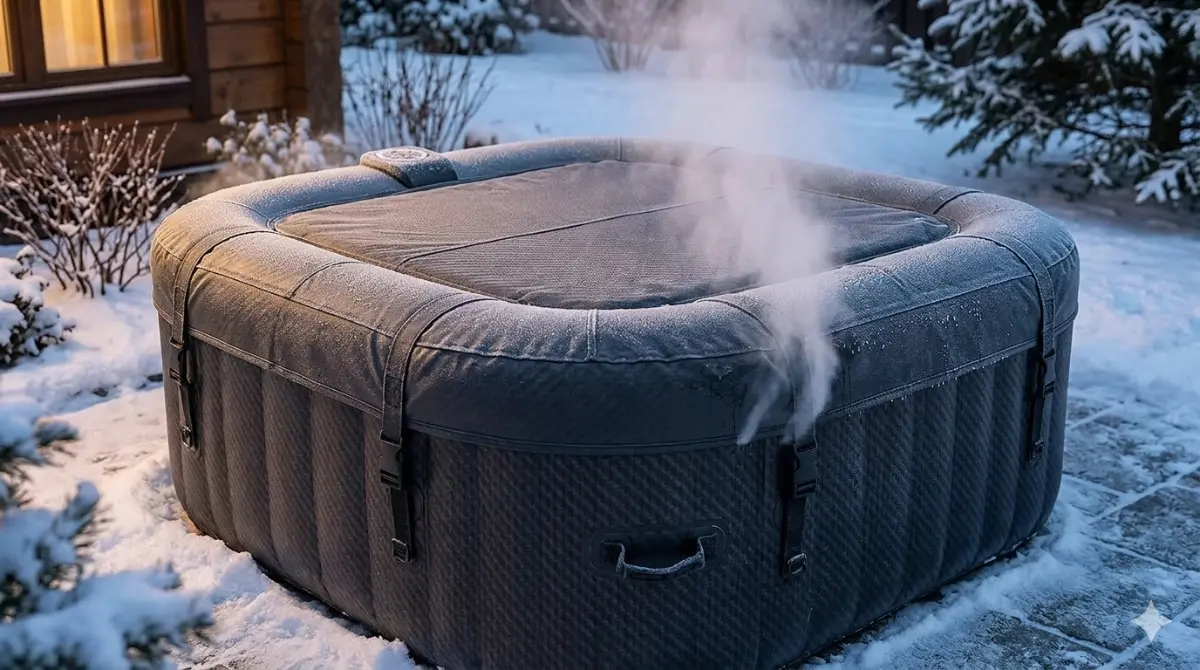
That’s exactly why a proper inflatable hot tub insulated cover isn’t optional equipment it’s the front line of your spa’s heat retention system. Without one, your heater works overtime trying to replace heat that’s simply evaporating into the air above your tub.
What Makes an Insulated Cover Different from a Regular One?
Not all hot tub covers are built the same. A standard cover might keep rain and debris out, but a genuine thermal cover for inflatable hot tub use goes much further.
The difference comes down to three things: foam density, layering, and fit.
Foam density determines how well the core resists heat transfer. Low-density foam compresses quickly, develops cold spots, and loses its insulating value within a season. High-density foam holds its shape, maintains consistent R-value Water chemistry importance (bonus context link) and performs reliably through repeated freeze-thaw cycles which is non-negotiable in Canadian winters.
Layering separates a basic lid from a true inflatable hot tub insulation blanket. The best covers include a reflective thermal lining on the underside that bounces radiant heat back into the water, a dense foam middle layer that blocks conductive heat transfer, and a waterproof, UV-treated outer shell that keeps the whole structure intact regardless of weather.
Fit is where most generic covers fall short. A cover that doesn’t sit flush against the tub rim even with small gaps at the corners or along the edge leaks warm air continuously. It’s the same principle as a draught under a door: the gap doesn’t have to be large to make the insulation largely ineffective. A square inflatable hot tub thermal cover designed for a round tub, or a cover a few centimetres too small, creates exactly this problem.
How the SaluSpa Insulated Cover Is Engineered for Real Performance?
The SaluSpa insulated cover included with Bestway’s EnergySense hot tub system models stocked at Relxtime is built around the specific challenge of Canadian outdoor use. It’s not a universal-fit afterthought.
Each cover is sized and shaped for its matching tub model, which means the perimeter skirt sits against the tub wall without gaps, and the rounded corners follow the tub’s actual profile.
The SaluSpa thermal cover pairs with the EnergySense® insulated liner inside the tub walls to create what functions as a closed thermal system. Heat rising off the water hits the insulated cover and reflects back down. Cold air outside can’t conduct through the foam core efficiently.
The perimeter skirt blocks wind from slipping under the cover edge. Together, these elements reduce heat loss by up to 40% compared to standard inflatable hot tubs without this system.
For a Canadian household running a spa through a six-month winter, that 40% difference in heat retention represents a meaningful reduction in electricity consumption and the kind of long-term saving that makes the Relxtime inflatable hot tub insulated cover a practical investment rather than a luxury.
Choosing the Right Insulated Cover for Your Setup
If you’re shopping for an insulated inflatable hot tub cover separately, or evaluating what came with your tub, here’s what actually matters in a Canadian context.
Foam thickness and taper. A 4-inch foam core handles moderate climates reasonably well. For sustained cold below -10°C, a tapered foam cover thicker at the centre, sloping toward the edges is better. The taper keeps condensation and meltwater draining toward the perimeter rather than pooling in the middle, where standing water compresses the foam and creates cold spots over time.
The centre hinge. A foldable spa cover design folds in half for easy removal, but the fold line is a natural weak point. Cheap covers have a bare seam down the middle that lets heat escape along its entire length. A well-made cover includes an insulating strip or overlapping flap at the centre hinge a small detail that makes a real difference in overall heat retention.
Outer shell material. A waterproof insulated cover for inflatable hot tub use in Canada needs to handle UV exposure in summer, heavy snowfall, and repeated winter hot tub care without cracking or allowing moisture to penetrate the foam core.
Marine-grade vinyl or a similarly sealed, mold-resistant material is the standard to look for. Once moisture gets into the foam, the cover’s insulating value drops dramatically and mold becomes a problem.
Skirt length and seal quality. The cover’s skirt the flap hanging down around the perimeter should be long enough to press firmly against the tub wall all the way around. A short or stiff skirt lifts in wind and breaks the seal. Look for a flexible, weighted skirt that conforms to the tub profile and holds position even in Canadian wind conditions.
Is an Insulated Hot Tub Cover Worth the Investment?
For any spa used outdoors in Canada, yes without qualification. The energy savings alone justify the cost within a single winter season of regular use. But the benefits extend beyond the electricity bill.
A properly insulated cover stabilises water temperature, which means your water chemistry stays more consistent. Evaporation slows down, so chemical concentrations shift less between uses.
You test less, adjust less, and spend less on chemicals. The heater and pump cycle less frequently, which reduces mechanical wear and extends the life of the spa unit overall.
The how to insulate inflatable hot tub in winter question often focuses on external solutions foam panels, thermal blankets added underneath, windbreaks. Those approaches help at the margins. None of them replace what a proper energy efficient inflatable hot tub insulated cover does at the water surface, which is where the problem fundamentally starts.
Conclusion
Heat retention in an inflatable hot tub isn’t primarily about how powerful the heater is it’s about how little heat you lose between cycles. A quality inflatable hot tub thermal cover addresses the biggest single source of heat loss directly, saves energy consistently, protects your water chemistry, and extends your equipment’s lifespan.
At Relxtime, every EnergySense®-rated SaluSpa model is paired with a thermal cover engineered for exactly this purpose because keeping Canadians warm through winter is a design requirement, not an afterthought.
Frequently Asked Questions?
Here are some frequently asked questions given below:
How does an insulated hot tub cover work to retain heat?
It works through layered insulation a reflective inner lining bounces radiant heat back into the water, a high-density foam core blocks conductive heat transfer, and a sealed outer shell prevents external cold from penetrating. The perimeter skirt stops warm air from escaping at the edges.
What is the difference between a 4-inch and 6-inch spa cover for cold climates?
A 6-inch or tapered foam cover provides a higher R-value and better insulation in sustained cold below -10°C. The taper also directs water and snow melt toward the edges rather than pooling in the centre, which preserves foam integrity over time.
How do I know if my inflatable hot tub cover fits properly?
The cover should sit flush against the tub rim on all sides with no visible gaps, and the perimeter skirt should press against the tub wall without lifting. If you can feel warm air escaping at the edges while the cover is on, the fit isn’t adequate.
Can I make my own insulated hot tub cover?
A DIY insulation jacket for inflatable hot tub is possible using foam board, reflective insulation material, and a waterproof outer fabric. The challenge is achieving the same perimeter seal and foam density as a manufactured cover. For Canadian winters, a purpose-built cover from a matched model range is generally more reliable.
How long does an insulated inflatable hot tub cover typically last?
With proper care, a quality insulated cover should last two to four years. Signs of failure include foam compression that doesn’t recover, waterlogging that makes the cover heavy, cracking of the outer shell, or visible gaps developing at the centre hinge or perimeter seam.