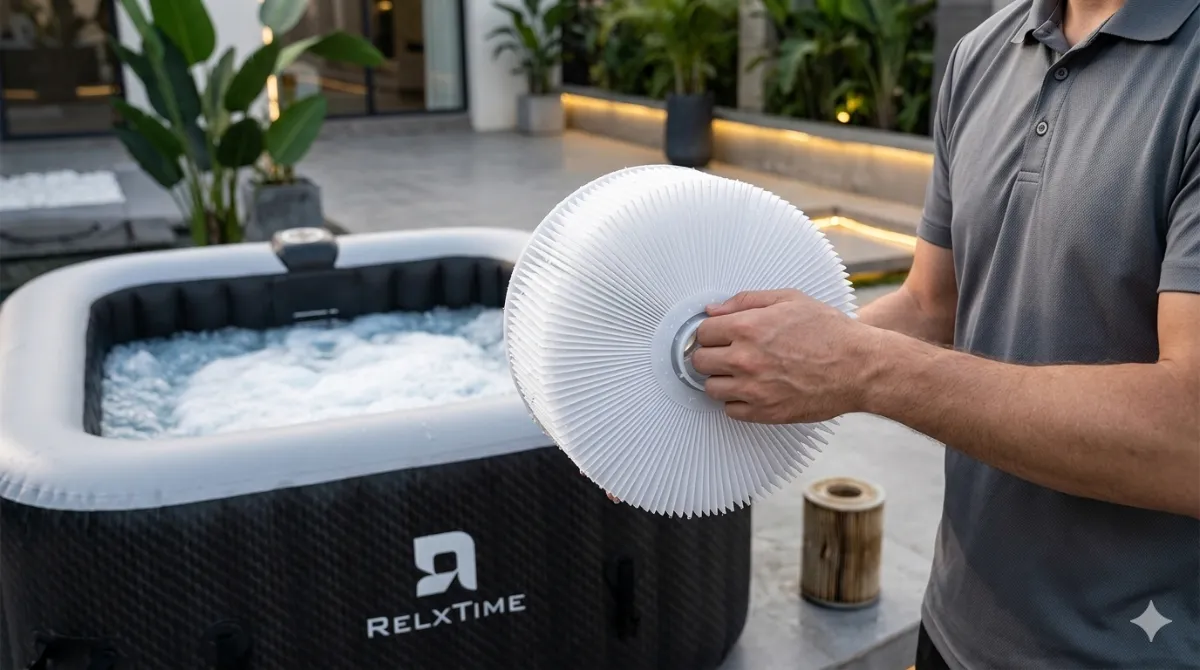
The filter cartridge is the most quietly critical component in your inflatable hot tub. While the heater and jets get most of the attention, the filter is what keeps your water safe, clear, and chemically stable between uses. Run your spa on a worn-out, clogged, or incorrectly sized cartridge and everything downstream suffers water clarity deteriorates, chemical balance shifts faster, the pump works harder than it should, and heating efficiency drops noticeably.
For Canadian spa owners using their tubs year-round through demanding seasonal conditions, getting the filter right isn’t a minor maintenance detail. It’s foundational to how well the entire system performs.
What a Hot Tub Filter Cartridge Actually Does ?
Before choosing a filter, it helps to understand what it’s doing. Water in your spa is continuously circulated through the filtration system during scheduled filter cycles. As water passes through the cartridge, the pleated filter media typically polyester or a polyester-paper blend traps contaminants: body oils, sunscreen residue, fine debris, dead skin cells, dust, and airborne particles that land in the open water.
This mechanical filtration works alongside your chemical sanitiser (chlorine or bromine) to keep water clean and clear. The filter handles physical particles; the chemicals handle microbial contamination. Neither system works well without the other and a degraded filter cartridge undermines both, because trapped organic material consumes sanitiser faster and creates the cloudy, unbalanced water that frustrates spa owners.
A correctly functioning spa water filtration system keeps water cleaner between chemical treatments, extends the time between necessary water changes, and protects the pump from ingesting debris that causes wear.
Hot Tub Filter Types: Understanding Your Options
Not all spa filters are the same. The three main filter types used in hot tubs and spas differ in how they capture contaminants, how they’re maintained, and which applications they suit.
Cartridge filters are the standard for inflatable hot tubs and most portable spa models. A pleated polyester or polyester-paper medium captures particles as water flows through the filter element. They’re easy to remove, rinse, and replace no backwashing equipment required. Cartridge filters are what Bestway SaluSpa models and the vast majority of consumer inflatable spas use, and they’re what this guide focuses on.
Sand filters use a bed of specially graded silica sand to trap particles. Water flows down through the sand bed and exits through a collector at the bottom. They’re common in larger swim spas and commercial installations, require periodic backwashing to clean, and aren’t relevant for inflatable hot tub use they require a separate pump and tank system that doesn’t integrate with portable spa designs.
Diatomaceous earth (DE) filters use a coating of fossilised diatom shells on filter grids to capture extremely fine particles down to 2 to 5 microns, finer than cartridge or sand filtration. They deliver exceptional water clarity but require more complex maintenance involving DE powder recharging and specialised disposal. DE filters are found in high-end permanent spa installations, not inflatable models.
For inflatable hot tub filter cartridge selection, you’re working within the cartridge filter category the question is which cartridge, sized correctly, in the right condition.
How to Choose the Right Cartridge for Your Spa ?
A simple guide to help you select the right spa cartridge for optimal filtration, water clarity, and overall hot tub performance.
Match by Model, Not by Measurement Alone
The most important step in selecting the correct hot tub filter is matching it to your specific spa model. Cartridge filters are designated by type codes Type I, Type II, Type IV, Type VI, Type VII, and others that correspond to specific dimensions and flow characteristics.
Using a cartridge that’s physically close but not the correct type creates two problems: poor sealing that allows unfiltered water to bypass the cartridge, and flow restriction or overflow that stresses the pump.
Bestway SaluSpa models including those available through Relxtime predominantly use Type VI filter cartridges. This is the most widely used cartridge type across the SaluSpa range, but always verify against your specific model’s manual before purchasing.
Some SaluSpa models use Type VII cartridges, and using the wrong type in a correctly-sized housing creates a filtration gap that’s invisible until water quality deteriorates.
Check your spa’s documentation or the housing itself many filter housings have the cartridge type code moulded into the plastic near the opening.
Understand the Micron Rating
Filter cartridges are rated by the minimum particle size they capture, measured in microns. Standard cartridge filters for inflatable spas typically capture particles down to 25 to 100 microns effective for the body oils, debris, and organic material that enters a hot tub through normal use.
A lower micron rating means finer filtration and clearer water, but also faster clogging and more frequent cleaning. A higher micron rating flows more freely but lets finer particles through. For most inflatable hot tub applications,
the OEM (original equipment manufacturer) cartridge rating is optimised for the pump flow rate of that specific model don’t try to upgrade to a finer-rated aftermarket cartridge without confirming it’s compatible with your pump’s pressure range.
Pleating Quality and Filter Media Material
Inside every cartridge, the filter medium is folded into pleats the more pleats, the greater the surface area available for filtration without increasing the cartridge’s physical size. More surface area means longer service life between cleanings and better particle capture.
Better-quality cartridges use spunbond polyester media rather than cellulose-polyester blends. Polyester handles the chemical environment of hot tub water chlorine, bromine, pH adjusters more durably than cellulose blends,
which degrade faster under repeated chemical exposure and hot water cycling. For Canadian owners using their spa through winter when chemical dosing needs careful management, polyester media cartridges last longer and maintain filtration performance more consistently.
How to Clean a Spa Filter Cartridge ?
Cleaning your cartridge correctly extends its service life and maintains filtration quality between replacements.
Rinse cleaning: the routine you should do every one to two days during active use. Remove the cartridge from its housing and rinse thoroughly with a garden hose, working from the top down between the pleats to flush trapped debris outward. Don’t use a pressure washer the high-pressure stream damages the pleat structure and reduces the filter’s effectiveness.
Chemical soaking: a deeper clean performed every one to two weeks, or whenever a rinse doesn’t restore adequate water clarity. A dedicated hot tub filter cleaning solution a cartridge filter cleaner or filter degreaser removes the oil and sunscreen residue that water rinsing can’t break down.
Soak the cartridge for the time specified on the cleaning solution, then rinse thoroughly before reinstalling.
Cleaning with diluted bleach: an alternative deep-clean method that many owners use successfully. A solution of one part household bleach to five parts water, used as a soak of two to four hours, effectively sanitises the cartridge and dissolves organic buildup.
Rinse extremely thoroughly after a bleach soak residual bleach entering your spa water will spike chlorine levels unpredictably and can cause irritation. Always rinse until no bleach smell remains before reinstalling.
One important point: always allow a cleaned cartridge to dry completely before reinstalling if time permits. A dry cartridge reinstalled performs better than a wet one that traps surface moisture against the filter housing seal.
When to Replace Rather Than Clean ?
Cleaning extends cartridge life, but it doesn’t extend it indefinitely. A cartridge that needs replacing shows specific signs that are distinct from one that simply needs a rinse.
Frayed or torn pleats are the clearest signal physical damage to the filter medium means particles pass through regardless of how clean the cartridge is. Discolouration that doesn’t clear after chemical soaking indicates mineral scale or organic buildup embedded in the filter media that cleaning can’t remove.
A cartridge that causes persistent water cloudiness despite correct chemical balance has lost its filtration effectiveness and needs replacement.
For typical Canadian usage several sessions per week through an active season most Type VI cartridges need replacing every one to two weeks with regular rinsing, or every four to six weeks with diligent daily cleaning. Keeping a stock of four to six replacement cartridges means you’re never caught running a degraded filter while waiting for replacements to arrive.
Filling Through the Filter
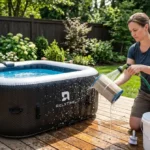
One technique worth knowing: filling your hot tub through the filter housing rather than directly into the tub helps pre-wet the filter media and removes air pockets from the filtration circuit before the pump starts. This reduces the dry-running risk to the pump on initial startup and ensures the filter is properly seated and sealed before the first filtration cycle runs.
Simply place the hose inside the filter housing opening during fill rather than dropping it over the tub wall. The water flows through the housing, purges air from the lines, and fills the tub normally it takes a few minutes longer but is gentler on the pump and filter on first use.
Conclusion
Choosing the right hot tub filter cartridge comes down to three things: correct type code for your specific spa model, quality filter media that handles chemical exposure durably, and a consistent cleaning and replacement routine that keeps filtration performing at the level your water quality depends on.
For Relxtime SaluSpa owners, Type VI cartridges in polyester media are the standard keep them clean, replace them on schedule, and your water clarity and chemical stability will reflect it. The filter cartridge is inexpensive and easily overlooked, but it’s the component that everything else in your water care routine depends on.
Frequently Asked Questions?
Here are some frequently asked questions given below:
How do I know which filter cartridge my inflatable hot tub needs?
Check your spa’s user manual for the designated cartridge type code most SaluSpa models use Type VI cartridges. You can also check the filter housing itself, which often has the type code moulded near the opening. Never substitute a different type based on similar dimensions alone proper seating and flow rate matching require the correct type.
How often should I clean my hot tub filter cartridge?
Rinse the cartridge with a garden hose every one to two days during active use. Do a chemical soak with filter cleaner or diluted bleach every one to two weeks. Replace the cartridge every one to two weeks for heavy use, or every four to six weeks with diligent daily cleaning.
Can I clean a hot tub filter cartridge with bleach?
Yes a diluted solution of one part bleach to five parts water is an effective deep-clean method. Soak for two to four hours, then rinse extremely thoroughly until no bleach odour remains before reinstalling. Residual bleach in the spa water causes unpredictable chlorine spikes and potential skin irritation.
Why is my hot tub water still cloudy after cleaning the filter?
Persistent cloudiness after a clean filter reinstallation usually indicates a water chemistry imbalance check pH, alkalinity, and sanitiser levels. If chemistry is correct and cloudiness remains,
the cartridge may have embedded contamination that cleaning hasn’t resolved and needs replacing. A shock treatment combined with a fresh cartridge typically resolves persistent cloudiness.
How many replacement cartridges should I keep in stock?
Keep a minimum of four to six replacement cartridges on hand, particularly for Canadian owners using their spa through winter when delivery times may be affected by weather. Running out of cartridges means either skipping filtration cycles which deteriorates water quality rapidly or shutting down the spa until new cartridges arrive.