Buying an inflatable hot tub in Canada isn’t the same as buying one in Florida or the UK. Your spa will face extreme cold, heavy snowfall, and constant freeze-thaw cycles that impact heating performance and efficiency. Understanding how cold weather hot tub heating works in these conditions is essential before choosing the right accessories, especially if you want to manage long-term performance and reduce unnecessary energy waste.
The good news is that the right accessories don’t require a large budget. A few well-chosen additions at the point of purchase make a dramatic difference in how your spa performs and how long it lasts through Canadian seasons.
Insulated Thermal Cover
If there’s one accessory that earns its cost back fastest in Canada, it’s a quality insulated thermal cover. As covered earlier, up to 60% of a hot tub’s heat loss happens through the water surface. In a Canadian winter, that directly impacts your energy bill which is why using a proper insulated hot tub cover becomes critical for maintaining temperature and reducing heater workload.
A proper insulated cover with a high-density foam core, reflective thermal lining, and tight-fitting perimeter skirt reduces heat loss by up to 40% compared to a basic lid. For a spa running through a six-month Canadian winter, that saving compounds into a meaningful reduction in electricity costs over the season.
Look for a cover specifically sized for your spa model generic covers that don’t sit flush against the rim create edge gaps that defeat the insulation entirely.
Ground Pad or Foam Base Mat
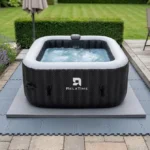
The surface your spa sits on directly affects both its lifespan and heating efficiency. A ground pad not only protects against punctures but also prevents heat from escaping into the ground. This becomes even more important when considering overall efficiency strategies like those discussed in how to lower hot tub running costs, where insulation plays a major role.
A quality closed-cell foam mat does three jobs simultaneously: it protects the inflated floor from abrasion and puncture against whatever surface lies beneath, it insulates against cold ground temperatures that draw heat downward through the tub floor, and it cushions the base against the small movements and settling that occur through freeze-thaw cycles.
On concrete, pavers, or decking surfaces that appear smooth but have micro-abrasions a mat is just as important as on gravel or grass. Cold concrete in January draws heat from a spa floor far more aggressively than most owners realise.
Floating Thermal Blanket
A floating thermal blanket adds a second layer of insulation directly on the water surface, reducing overnight heat loss significantly. When combined with the right heating approach explained in cold weather hot tub heating, it helps maintain temperature more consistently and reduces recovery time between uses.
The cost is minimal usually under $30 CAD and the impact on overnight heat retention is noticeable. In combination with a quality insulated cover, a floating thermal blanket meaningfully reduces the temperature drop between evening sessions and morning use.
For Canadian owners running their spa through winter, that reduction translates directly to shorter heating recovery times and lower energy consumption.
Cut the blanket to match your spa’s interior diameter and float it directly on the water before placing the main cover. Remove it when soaking and store it flat to preserve the bubble structure.
Spa Chemical Starter Kit
Water chemistry is non-negotiable for safe, comfortable, and equipment-protecting hot tub use. Every Canadian inflatable hot tub owner needs a spa chemical starter kit that covers the core water care requirements from the first fill.
A complete kit should include pH increaser and decreaser, an alkalinity increaser, chlorine or bromine sanitiser tablets, a shock treatment product for periodic oxidation, and test strips or a digital tester for regular water monitoring. Some kits include a clarifier for maintaining water clarity between chemical adjustments.
Canadian tap water chemistry varies significantly by region hard water in prairie provinces, softer water on the coasts which means your starting balance after each fill will differ depending on where you live.
Test your fresh fill before adding any chemicals, and adjust from there rather than following a fixed dosing schedule that doesn’t account for your local water composition.
Inflatable Spa Bench or Booster Seat
An inflatable spa bench improves comfort and posture, especially during longer soaks. Instead of sitting at floor level, it aligns your body with the jet zone for a better experience. This becomes even more important when considering long usage habits like whether to leave your inflatable hot tub on or off, where comfort and efficiency go hand in hand.
For Canadian owners who use their spa therapeutically for muscle recovery, back pain relief, or stress reduction after physical work correct seating position isn’t a comfort preference, it’s what determines whether the jets are actually doing anything useful. A bench is a low-cost accessory with a high-impact effect on the quality of every soak.
Hot Tub Canopy or Gazebo
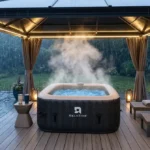
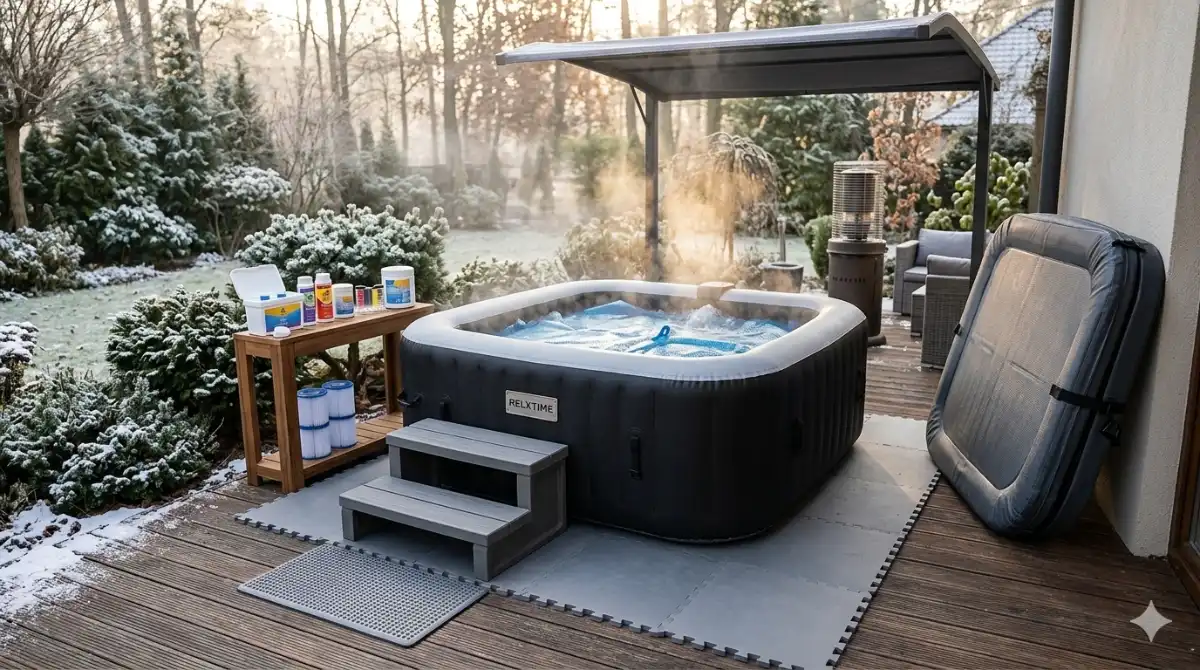
A canopy for inflatable hot tub outdoor use addresses multiple Canadian-specific challenges simultaneously. Wind is one of the largest contributors to heat loss from an outdoor spa a canopy that blocks prevailing winds reduces how hard the heater works and makes soaking comfortable in conditions that would otherwise send you indoors.
Beyond wind, a canopy provides UV protection that extends the life of your spa’s PVC or Tritech® material, rain cover for comfortable soaking regardless of weather, and privacy for soaking without your neighbours’ full view. For urban Canadian backyards where properties sit close together, privacy often becomes the most appreciated function within the first month of ownership.
Filter Cartridge Replacements
The filter cartridge is the most frequently replaced consumable in any inflatable spa, and running short is a beginner mistake worth avoiding. SaluSpa models available through Relxtime use Type VI filter cartridges that should be rinsed every one to two days during active use and replaced every one to two weeks depending on usage intensity and bather load.
Keeping a stock of replacement filter cartridges at minimum a four-pack means you’re never running your spa on a degraded filter that restricts water flow, reduces heating efficiency, and allows water quality to deteriorate.
A clogged filter is also the most common cause of unexpectedly slow heating a problem that disappears instantly with a fresh cartridge.
Non-Slip Spa Mat and Steps
Safety around the spa edge is practical rather than precautionary in a Canadian context. Wet surfaces around an inflatable hot tub become icy in cold weather, and stepping out of a 40°C spa onto a frozen deck or patio surface creates a genuine slip risk.
A non-slip mat placed outside the spa around the entry point provides grip on wet and potentially icy surfaces. Foam or rubber-backed mats rated for outdoor use stay in place and drain water away from the contact surface rather than pooling.
Portable inflatable hot tub steps serve a related function they make entry and exit easier and reduce the awkward high step over the tub wall that’s particularly difficult for older users or anyone with limited mobility. Steps with a non-slip surface and a stable base are the right design for outdoor Canadian use.
LED Floating Lights
This one is genuinely about enjoyment rather than function but it’s worth including because evening soaking is when most Canadians use their spa, and ambient lighting transforms the experience.
LED floating spa lights are waterproof, battery or solar-powered, and float freely on the water surface. They create the kind of warm, low-level ambient glow that makes an outdoor spa session feel genuinely relaxing rather than like sitting in an illuminated barrel in your backyard.
Many Canadians find their evening spa use increases significantly once they add simple floating lights and more regular use means the spa justifies its running costs more effectively.
Accessories Priority for Canadian Owners
A focused guide to the most important accessories Canadian owners should prioritize for durability, comfort, and year-round use.
| Accessory | Priority | Primary Benefit |
|---|---|---|
| Insulated thermal cover | Essential | Heat retention, energy saving |
| Ground pad or base mat | Essential | Puncture protection, insulation |
| Spa chemical starter kit | Essential | Water safety and clarity |
| Filter cartridge stock | Essential | Equipment protection |
| Floating thermal blanket | High | Winter heat retention |
| Inflatable bench or seat | High | Comfort, jet alignment |
| Canopy or gazebo | High | Wind, UV, privacy, rain |
| Non-slip mat and steps | Recommended | Safety, ease of access |
| LED floating lights | Optional | Evening ambiance |
Conclusion
The right inflatable hot tub accessories for Canadian owners aren’t about turning a simple spa into a luxury resort setup they’re about making your spa work properly in a climate that challenges outdoor equipment in ways milder countries don’t experience.
An insulated cover, a ground pad, proper chemicals, spare filters, a thermal blanket, and a bench cover the practical essentials that keep your spa safe, efficient, and comfortable through every Canadian season.
At Relxtime, we stock the accessories that our Canadian customers actually need matched to the SaluSpa models we carry and chosen for performance in real Canadian conditions.
Frequently Asked Questions?
Here are some frequently asked questions given below:
What accessories do I need for an inflatable hot tub in Canada?
The essentials are an insulated thermal cover, a ground pad or foam base mat, a spa chemical starter kit, and replacement filter cartridges. Canadian-specific priorities also include a floating thermal blanket for winter heat retention and a spa canopy for wind protection and UV shielding.
Can an inflatable hot tub be used indoors in Canada?
Yes, with proper ventilation. Chemical vapours from sanitised spa water require adequate airflow, and humidity from an indoor spa needs to be managed to prevent moisture damage to walls and floors. A garage, sunroom, or well-ventilated basement can work an unventilated living room cannot.
What chemicals do I need for an inflatable spa in Canada?
At minimum: pH adjusters (increaser and decreaser), alkalinity increaser, chlorine or bromine sanitiser, oxidising shock treatment, and test strips. Canadian tap water varies significantly by region, so test your fresh fill before adding any chemicals and adjust based on your actual readings.
How do I prevent my inflatable hot tub from freezing in a Canadian winter?
Keep the spa running with freeze protection active models with Freeze Shield® technology handle this automatically. Use an insulated thermal cover at all times when not soaking, add a floating thermal blanket, and position the spa in a wind-sheltered location. Never leave a powered-off spa with water in it through a Canadian winter.
How do I reduce heat loss from my inflatable hot tub in Canadian winter?
Layer your insulation: an insulated cover on top, a floating thermal blanket on the water surface, a foam ground pad underneath, and a wind-blocking canopy or shelter around the spa. Each layer addresses a different heat loss pathway together they can cut winter heating costs by 30% to 40% compared to an unprotected spa.