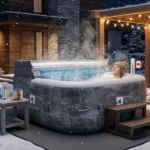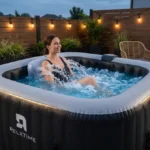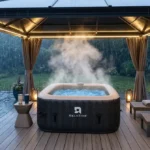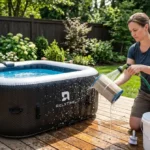
Setting up an inflatable hot tub feels straightforward unbox, inflate, fill, heat, done. What most first-time owners don’t think through carefully enough is what the spa is sitting on. That decision affects stability, heat retention, equipment lifespan, and whether your tub survives a Canadian winter without damage.
A filled inflatable hot tub is heavy. A standard 4-person model holding 800 litres of water weighs close to 900 kilograms once you add bathers. That weight, distributed across the inflated floor, needs a surface that’s level, stable, load-bearing, and won’t shift, puncture, or degrade under the spa through seasons of freeze-thaw cycling.
Getting the base for inflatable hot tub right from the start prevents a long list of problems from slow punctures caused by hidden debris to heat loss from cold ground contact to structural instability that strains the tub’s seams over time.
What Makes a Good Hot Tub Base?
Regardless of which ground pad and base option for an inflatable hot tub you choose, four requirements apply in every Canadian setting.
Level surface. Even a slight slope as little as 2 to 3 degrees causes water to pool unevenly inside the tub, puts asymmetric stress on the inflated walls, and makes soaking noticeably lopsided. Always check your base with a spirit level before filling. Correcting a slight slope is far easier before the spa is filled than after.
Load capacity. The surface must handle the full weight of the filled spa without sinking, shifting, or compressing unevenly. Soft ground, wet soil, and low-density materials can appear stable when dry but compress gradually under sustained load particularly through freeze-thaw cycles that heave and settle the ground underneath.
Smooth, debris-free surface. Gravel, sharp stones, twigs, and root edges are the primary cause of inflatable floor punctures. The ground contact surface needs to be free of any sharp material, and a protective ground pad for inflatable hot tub adds a critical buffer layer between the tub floor and whatever is beneath it.
Drainage. Poor drainage around the base leads to waterlogging under and around the spa, which accelerates material degradation and creates conditions for mold and algae on the tub’s outer surfaces. The base should allow water to drain away naturally rather than pooling.
The Best Base Options for Canadian Yards
A practical guide to choosing the most stable, durable, and weather-ready base options for Canadian outdoor setups.
Concrete Slab
A poured concrete slab is the most stable and durable long-term base for any hot tub, inflatable or otherwise. A 4-inch reinforced concrete pad rated for the spa’s weight distribution handles Canadian freeze-thaw cycles reliably, provides a perfectly level surface, and drains well with a slight slope away from the slab edge.
The limitations are cost and permanence. A properly poured concrete slab with appropriate reinforcement runs several hundred to over a thousand dollars depending on size and labour. It’s not a weekend project for most homeowners, and it commits that section of your yard to a spa location.
For inflatable hot tub owners planning to use their spa year-round at a fixed location, concrete is worth considering. For anyone who wants the flexibility to move the spa seasonally or store it in winter, concrete is likely over-engineered for the application.
Always place a foam mat under inflatable hot tub on concrete regardless of how smooth the surface appears. Concrete has surface irregularities that aren’t visible to the naked eye but create pressure points against the inflated floor over time. A mat removes that contact entirely.
Paving Slabs and Patio Pavers
An existing paved patio or a properly laid paver base is an excellent inflatable hot tub surface provided the pavers are level, stable, and set on a proper compacted sub-base with polymeric sand joints that prevent shifting.
Pavers that are loosely laid, unevenly settled, or have sharp edges at the joints can create the same puncture risk as gravel. Before placing your spa on any paver surface, run your hand across it to feel for raised edges, loose stones, or debris in the joints.
The practical advantage of pavers over concrete is partial reversibility a paver patio serves multiple functions and doesn’t commit the space exclusively to the hot tub. In Canadian climates, a well-laid paver base with proper drainage also handles frost heave better than poured concrete because individual pavers can accommodate slight ground movement without cracking.
Compacted Gravel Pad
A compacted crushed stone gravel pad is a popular DIY hot tub foundation in Canadian yards, and for good reason. It’s relatively affordable, drains extremely well, handles freeze-thaw movement without heaving significantly, and can be levelled precisely during construction.
The standard approach involves excavating 150 to 200mm of soil, laying geotextile fabric to suppress weeds and prevent mixing with the subsoil, filling with crushed stone or road base gravel, and compacting in layers. A timber frame around the perimeter keeps the gravel contained and the edges defined.
The critical point: the top surface of a gravel pad must be finished smoothly and covered with a ground pad or foam mat before the spa is placed. Gravel in direct contact with the inflated floor is a puncture waiting to happen. A hot tub base pad for inflatable spa use placed over compacted gravel gives you the drainage and stability of gravel with the surface protection of foam.
Interlocking Foam or EVA Tiles
For renters, for temporary setups, or for anyone who wants a solution that can be installed and removed without permanent modification to the yard, interlocking foam or EVA (ethylene-vinyl acetate) tiles are the most practical option.
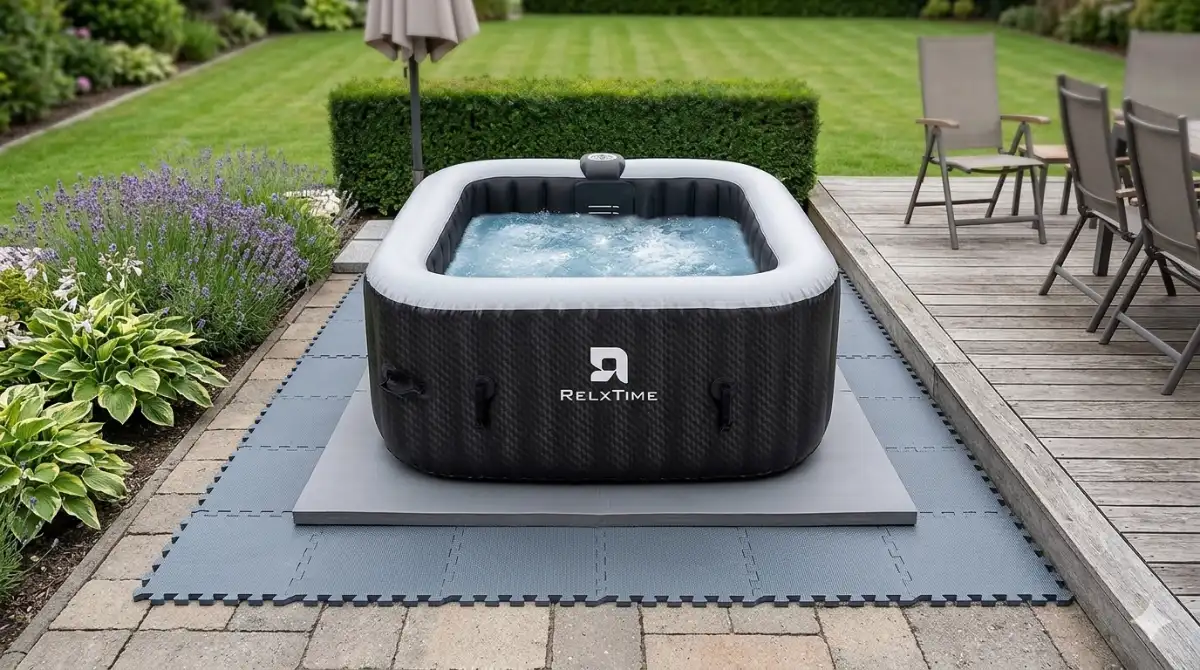
These tiles lock together to form a continuous surface, cushion the tub floor from ground contact, provide insulation against cold ground, and can be taken up, dried, and stored when not in use. They’re the right choice for apartment balconies, rental properties, or seasonal setups where permanent base construction isn’t possible.
The limitation is long-term stability under heavy sustained loads. EVA foam compresses over time, particularly at tile edges and joints. For a spa used year-round at a fixed location, foam tiles will need replacing more frequently than a hard base. For seasonal use through a Canadian summer and autumn, they’re perfectly adequate.
Synthetic Spa Pad Tiles
A step up from basic foam tiles, synthetic plastic spa base tiles typically made from recycled high-density polyethylene (HDPE) are specifically designed for spa foundations. They provide a hard, stable surface, allow water to drain through the tile structure, resist freeze-thaw degradation, and don’t compress under sustained load the way foam does.
These tiles are the preferred portable base option for Canadian spa owners who want something more durable than foam but without permanent construction. They can be laid on grass, compacted soil, or existing paving, and lifted and relocated as needed. A ground pad for inflatable hot tub placed on top of these tiles completes the setup with surface protection.
Grass and Bare Ground
Placing an inflatable hot tub directly on grass or bare soil is the option most commonly regretted by first-time owners. The combination of sustained weight, heat, moisture, and shade created by the spa kills the grass within weeks,
The ground softens and settles unevenly under the load, and any debris stones, roots, sticks migrates toward the tub floor over time.
If grass or bare ground is the only available surface, a substantial ground preparation is needed before placement. Clear and level the area thoroughly, compact the soil, and use a heavy-duty hot tub floor mat for inflatable tub rated for outdoor use.
A timber-framed gravel base on grass is a weekend project that substantially improves on placing a mat directly on soil, and it’s worth the effort for any spa that will be used regularly.
The Ground Pad: Non-Negotiable Regardless of Base Type
Whatever base you choose, a dedicated ground pad for inflatable hot tub belongs between the base surface and the spa floor in every setup. This isn’t about comfort it’s about protecting the tub material from the cumulative abrasion, pressure, and moisture contact that any surface creates over months of use.
A quality outdoor ground pad for spa use should be at least 10mm thick, made from closed-cell foam or similar moisture-resistant material that won’t absorb water and grow mold underneath the spa, cut to match the tub’s footprint, and UV-resistant if any portion will be exposed to sunlight around the tub perimeter.
The thermal benefit is a useful bonus: a foam pad under the tub reduces heat loss to the cold ground below, especially when paired with a proper insulated hot tub cover which is particularly relevant on concrete slabs and in Canadian winter conditions where ground temperatures drop well below zero.
Comparison at a Glance
A quick side-by-side overview to easily compare key features, differences, and benefits at a glance.
| Base Type | Stability | Cost | Permanent | Best For |
|---|---|---|---|---|
| Concrete slab | Excellent | High | Yes | Year-round fixed setups |
| Paving slabs | Very good | Medium | Partial | Existing patios |
| Compacted gravel | Good | Low-medium | No | DIY permanent pad |
| HDPE spa tiles | Good | Medium | No | Portable, seasonal use |
| EVA foam tiles | Moderate | Low | No | Renters, balconies |
| Bare grass | Poor | None | No | Not recommended |
Conclusion
The right base for an inflatable hot tub in Canada balances stability, drainage, surface protection, and the reality of Canadian freeze-thaw conditions. A concrete slab or compacted gravel pad suits permanent year-round setups. Interlocking HDPE tiles or EVA foam tiles serve seasonal or portable installations well.
Whatever base you choose, a dedicated ground pad for inflatable hot tub protection belongs in every setup it’s the layer that keeps your tub floor intact through seasons of use. At Relxtime, we recommend sorting your base before your first fill, not after your first puncture.
Frequently Asked Questions?
Here are some frequently asked questions given below:
What is the best base for an inflatable hot tub on grass in Canada?
A timber-framed compacted gravel pad is the best permanent solution on grass. For temporary setups, HDPE interlocking spa tiles on compacted, level ground work well. In all cases, add a ground pad or foam mat between the base and the tub floor to prevent punctures and insulate against cold ground.
Do I need a special ground pad under my inflatable hot tub?
Yes. A ground pad protects the inflated floor from abrasion, pressure points, and moisture contact with the base surface. It also provides thermal insulation against cold ground, which reduces heat loss and heating costs particularly relevant in Canadian winters.
Can I put an inflatable hot tub on a wooden deck in Canada?
Yes, provided the deck is rated to handle the filled weight typically 900 kilograms or more for a 4-person spa. Check your deck’s load capacity before proceeding, and add a protective mat between the tub and the deck surface to prevent moisture damage to the decking boards.
How do I level the ground for an inflatable hot tub?
Use a spirit level across multiple points on the prepared surface before placing the spa. For soil or gravel bases, add or remove material and compact until level readings are consistent. Even a small slope creates noticeable water imbalance and uneven structural stress once the spa is filled.
Will an inflatable hot tub damage my lawn permanently?
If placed directly on grass, yes sustained weight, shade, heat, and moisture kill the grass underneath within weeks. Protect your lawn by using a base structure that distributes the weight broadly, and consider a portable tile base that can be removed seasonally to allow the grass to recover.