Most inflatable hot tubs heat water at roughly 1°C to 1.5°C per hour under normal outdoor conditions. Starting from cold tap water typically around 10°C to 15°C in Canada and reaching the standard soaking temperature of 40°C means you’re looking at anywhere from 18 to 24 hours for a first fill in moderate weather.
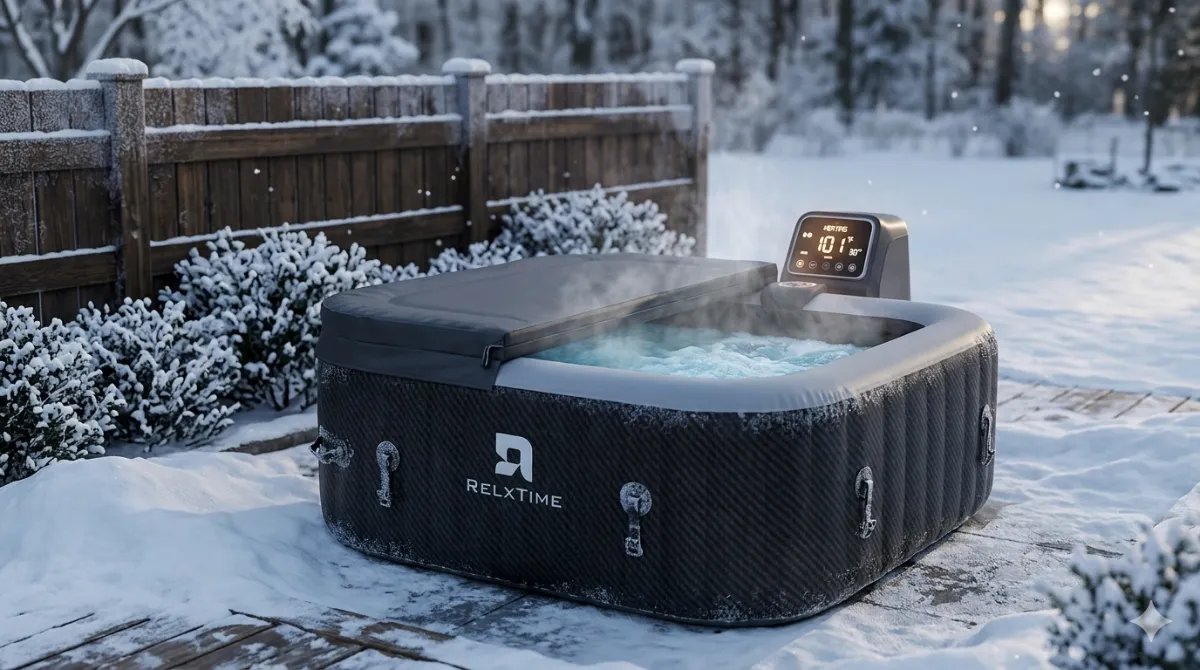
In cold Canadian winter conditions, with ambient temperatures below zero and no shelter, that window can stretch to 26 to 30 hours or longer.
That’s not a malfunction. It’s physics and understanding what’s actually driving that timeline helps you plan better, heat smarter, and avoid the frustration of sitting beside a lukewarm spa hot tub heating issues
waiting for it to be ready.
Why Inflatable Hot Tubs Heat Slowly Compared to Hardshell Spas ?
The heating rate difference between an inflatable spa and a traditional hardshell hot tub comes down to two factors: heater wattage and insulation.
Most inflatable hot tubs use heaters rated between 1,500 and 2,200 watts designed to run on standard household electrical circuits without requiring hardwired installation. Hardshell spas typically use 4,000 to 6,000-watt heaters on dedicated 240V circuits. That’s two to three times the heating power, which directly translates to faster heat-up times.
Insulation follows a similar gap. A quality hardshell spa surrounds the water with dense foam insulation on all sides, a thick insulated shell, and often a heated cabinet space that retains warmth. An inflatable hot tub insulates primarily through its wall material and the cover placed on top effective when used correctly, but not equivalent to a fully foamed hardshell cabinet.
Neither of these is a reason to avoid an inflatable spa they’re simply the trade-offs that come with portability, affordability, and the ability to set up on any flat outdoor surface without permits or professional installation.
What Actually Affects Heating Time ?
A quick breakdown of the key factors that influence heating time, helping you understand what speeds it up or slows it down.
Starting Water Temperature
This is the most controllable variable most owners overlook. If your cold tap water comes out at 8°C in January common in many Canadian regions you’re starting 32°C below your target temperature. Fill instead with the warmest water your tap produces, or partially fill with warm water from an indoor source if practical for your setup.
Filling with water that’s already 20°C rather than 8°C cuts your heat-up time by roughly 8 to 10 hours at a 1°C-per-hour heating rate. That’s a meaningful difference that costs nothing except a bit of planning.
Ambient Air Temperature
The colder the air around your spa, the harder your heater works just to offset heat loss and the less of its output goes toward actually raising the water temperature. On a calm summer day at 22°C, your heater is working almost entirely on heating. On a -15°C January night in Alberta, a significant portion of that same heater output is simply compensating for the cold air pulling heat away from the tub walls and water surface.
The table below gives a realistic sense of how ambient temperature affects hot tub heating time in winter versus summer for a standard 4-person inflatable spa starting at 15°C water temperature:
| Ambient Temp | Approx. Heating Rate | Time to Reach 40°C |
|---|---|---|
| +20°C (summer) | 1.5°C per hour | ~17 hours |
| +10°C (autumn) | 1.2°C per hour | ~21 hours |
| 0°C (early winter) | 0.9°C per hour | ~28 hours |
| -10°C (deep winter) | 0.7°C per hour | ~36 hours |
| -20°C (severe cold) | 0.5°C per hour | ~50 hours |
These are approximate figures for an uninsulated, uncovered spa in still air. The right setup reduces all of these figures significantly.
Wind Exposure
Wind is the factor that surprises most new spa owners. Even mild wind across the water surface and tub walls dramatically accelerates heat loss. A spa heating in a sheltered corner against a fence or wall heats measurably faster than the same spa sitting exposed in the middle of a yard in a 20 km/h wind.
If you’re setting up in Canada and want to reduce hot tub heating time, positioning your spa against a sheltered, wind-blocking structure is one of the highest-impact decisions you can make and it costs nothing especially when planning your overall hot tub setup and accessories
Spa Size and Water Volume
A 2-person spa holding 500 litres heats faster than a 6-person spa holding 1,000 litres, all else being equal. More water simply requires more energy to raise temperature. If you primarily soak with one or two people,
choosing a smaller capacity model like Relxtime’s 2-person options isn’t just a space decision it’s an efficiency decision that pays off every time you heat from cold.
How to Heat Your Inflatable Hot Tub Faster?
Keep the Cover On During the Entire Heat-Up
Insulated hot tub cover.This is the most impactful single action you can take. The water surface loses heat rapidly during heating leaving the cover off while the spa heats up is the equivalent of trying to boil a kettle with the lid off. Put the insulated cover on from the moment you start heating and only remove it when you’re ready to get in.
A thermal blanket for inflatable hot tub placed directly on the water surface underneath the cover adds a second insulation layer right where heat loss is highest. These are inexpensive and cut heating time noticeably during cold weather by reducing surface evaporation.
Turn the Jets Off While Heating
Air jets vs hydro jets Running the air jets during heating introduces cold ambient air into the water the opposite of what you want. Air jets pull air from the surrounding environment and bubble it through the water. In winter, that air might be 0°C or colder. Keep jets off until the water reaches your target temperature.
The heater operates independently of the jets on most inflatable spa models. Let it run clean, with just the pump circulating water through the heater, until temperature is reached. Then turn on the jets for your soak.
Use a Foam Mat Underneath
Heat loss through the floor is underestimated. Cold ground particularly concrete, stone, or frozen earth draws heat downward through the inflatable floor continuously during the heat-up process.
A foam or thermal mat placed under the spa before filling interrupts that conduction path and keeps more heat in the water where it belongs.
Don’t Drain Between Uses If You Can Avoid It
Starting from heated water is dramatically faster than starting from cold. A spa maintained at even 30°C between uses takes a fraction of the time to reach soaking temperature compared to one drained and refilled from cold tap water.
In Canadian winters especially, maintaining water between uses using economy mode to hold a lower temperature during idle periods is far more energy and time efficient than the drain-and-refill approach. The heating energy needed to recover from 30°C to 40°C is a fraction of what’s required to heat from 8°C to 40°C.
Why Is My Hot Tub Heating Slowly?
If your spa is taking significantly longer than the estimates above, a few specific issues are worth checking.
A dirty or clogged filter cartridge restricts water flow through the heater, reducing heating efficiency noticeably. Rinse your filter every one to two days during active use and replace it on schedule this is the most common cause of unexpectedly slow heating on an otherwise functional spa.
Check that the heater and pump are both running. Some models have independent switches for the heater and circulation pump. If the pump is running but the heater indicator isn’t showing active heating, a thermostat reset or technical fault may be the cause.
Extremely cold inlet water combined with no cover and exposed wind conditions can produce heating rates so slow they feel like a malfunction. Rule out setup factors before assuming a technical problem.
Conclusion
How long an inflatable hot tub takes to heat up in cold weather depends on starting water temperature, ambient conditions, wind exposure, spa size, and how well the spa is insulated during the process.
Under typical Canadian winter conditions, plan for 20 to 30 hours for a first heat from cold and use that time productively by keeping the cover on, turning jets off, and sheltering the spa from wind.
At Relxtime, our SaluSpa models with EnergySense® insulation are designed to minimise that heating window and maintain temperature efficiently once reached, so you spend more time soaking and less time waiting.
Frequently Asked Questions?
Here are some frequently asked questions given below:
How long does an inflatable hot tub take to heat up for the first time?
From cold tap water at around 10°C to 15°C, expect 18 to 24 hours in mild weather and 26 to 36 hours in cold Canadian winter conditions. Starting with warmer tap water and keeping the insulated cover on throughout significantly reduces this time.
Can I fill my inflatable hot tub with warm water to speed up heating?
Yes and it’s one of the most effective ways to cut heating time. Filling with the warmest water your tap provides, or mixing in warm water from an indoor source, reduces the temperature gap your heater needs to close. Starting at 20°C instead of 8°C saves roughly 8 to 12 hours of heating time.
Why is my hot tub heating slowly even with the cover on?
The most common cause is a dirty or clogged filter cartridge restricting water flow through the heater. Rinse or replace the filter and check that both the heater and circulation pump are actively running. Wind exposure and extreme cold can also slow heating rates significantly even with the cover in place.
Should I turn the jets on while the hot tub is heating up?
No. Air jets introduce cold ambient air into the water during operation, which actively slows heating in cold weather. Keep jets off until the water reaches your target temperature, then activate them for your soak.
Is it more efficient to keep my hot tub heated between uses or drain and refill it?
In Canadian winters, maintaining water between uses on economy mode is almost always more energy and time efficient than draining and reheating from cold. Reheating from 30°C takes a fraction of the energy and time required to heat from cold tap water, particularly when ambient temperatures are below zero.