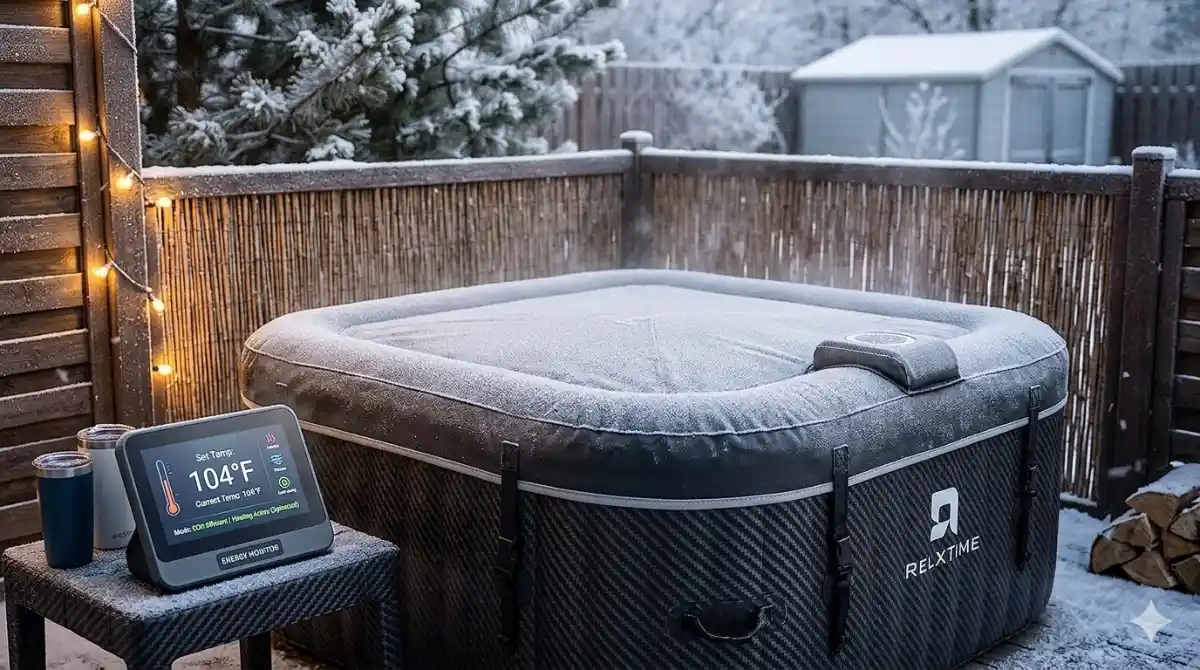
Let’s start with honest numbers. The cost of running a hot tub in Canada varies by province, spa size, and usage habits but most inflatable hot tub owners can expect cost of running a hot tub in Canada to spend between $30 and $80 CAD per month on electricity, depending on the season. In winter, when your heater is fighting ambient temperatures of -15°C or lower, that figure can climb toward the higher end without the right energy habits in place.
The good news is that most of that cost is manageable. The biggest drivers of hot tub running costs aren’t fixed they’re directly influenced by how you set up, use, and maintain your spa. Small changes compound quickly, and Canadian spa owners who apply even a few of the strategies below typically see noticeable reductions within the first billing cycle.
Never Underestimate the Cover
If there’s one thing that separates a high-running-cost spa from an efficient one, it’s cover discipline. Heat loss through the water surface insulated hot tub cover accounts for the majority of energy consumed by any hot tub heater. Every hour your spa sits uncovered or covered with a poor-fitting lid is an hour the heater is compensating for heat that’s simply evaporating into the air.
A proper insulated hot tub cover with a high-density foam core and a tight perimeter skirt is the single highest-return investment in spa energy efficiency. Bestway’s EnergySense® insulated covers, paired with EnergySense® liner technology on matching SaluSpa models available at Relxtime, can reduce heat loss by up to 40%. In Canadian winters, that difference shows up clearly on your electricity bill.
The habit matters as much as the equipment. Put the cover back on within minutes of finishing a soak not after you’ve dried off, made a drink, and come back twenty minutes later. Those uncovered minutes add up across a week of regular use.
Use Economy Mode and Vacation Mode Correctly
Most modern inflatable hot tubs include energy-saving settings that go underused by the majority of owners. Hottubeconomymode reduces heating frequency by allowing the water temperature to drop slightly and only heating during programmed filtration cycles.
If you use your spa on a predictable schedule say, evenings only economy mode keeps the water at a lower temperature during the day and heats it up ahead of your usual soak time.
Vacation mode is different. It drops the set temperature significantly typically to around 20°C to maintain just enough warmth to prevent freezing without running the full heater cycle. It’s designed for when you’re away for a week or more. The key misunderstanding many owners have is thinking they should use vacation mode regularly to save money.
In Canadian winters, the energy cost of reheating a 20°C spa back to 40°C from scratch is often higher than simply maintaining 38°C continuously. Use vacation mode for genuine absences, not daily energy management.
For daily efficiency, economy mode is the right tool not vacation mode.
Keep the Temperature Steady, Not Cycling
This surprises many people: lowering your hot tub temperature when you’re not using it doesn’t always save money. Heating water from 30°C back to 40°C requires significantly more energy than maintaining 38°C continuously, particularly in winter when heat loss is rapid.
The most hot tub temperature settings approach for daily Canadian use is to set a consistent temperature typically 37°C to 38°C rather than the maximum 40°C and leave it there. You lose less energy maintaining a slightly lower consistent temperature than repeatedly cycling between low and high. The heater runs in shorter, more efficient bursts rather than long recovery cycles.
Reserve temperature drops for periods of three or more days when the spa genuinely won’t be used.
Run Filtration Cycles at Off-Peak Hours
Electricity pricing in many Canadian provinces particularly Ontario with its time-of-use billing varies significantly by time of day. Running your spa’s filtration cycles during off-peak hours (typically nights and weekends) rather than peak hours (weekday daytimes) can reduce the per-kilowatt cost of those cycles.
Check your provincial utility’s rate structure. Scheduling filtration to run between 11pm and 7am costs meaningfully less per cycle in time-of-use billing areas. Most spa digital panels allow you to set filtration cycle timing directly.
Spa filtration energy usage is lower than the heater but still consistent across a day. Shifting those cycles to off-peak hours is a zero-effort saving once set up.
Optimise Your Spa’s Physical Setup
Where and how your spa sits in your yard has a direct impact on hot tub energy consumption. Wind is one of the most significant and underappreciated factors in heat loss from outdoor spas.
Place your spa against a sheltered wall, fence line, or windbreak particularly on the north and west sides where prevailing Canadian winds typically come from. A spa exposed to open wind on all sides works its heater far harder than one in a sheltered corner, even at the same ambient temperature.
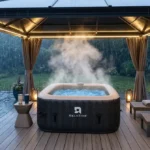
Adding a hot tub canopy or gazebo structure reduces wind exposure further and significantly cuts the radiant heat loss from the water surface. In combination with a quality insulated cover, a canopy-sheltered spa can cut winter heating costs substantially compared to an exposed setup.
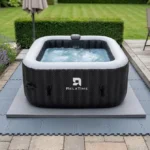
An insulated base mat placed under the spa also helps. Cold ground draws heat downward through the inflatable floor, particularly on concrete or stone surfaces. A foam or thermal mat interrupts that conduction path.
Maintain Water Chemistry to Reduce Drain Frequency
Every time you drain and refill your hot tub, you’re paying to heat a full tub of cold tap water from scratch typically 800 to 1,000 litres depending on your model. In winter, heating that volume from cold tap temperature (often 5°C to 10°C in Canada) to 40°C is one of the most energy-intensive events your spa experiences.
Proper water chemistry maintenance extends the time between necessary drains. Test your water at least twice a week, keep pH between 7.2 and 7.8, and maintain sanitiser levels consistently. A saltwater hot tub system or an automated chemical dispenser like Bestway’s ChemConnect™ can reduce the manual effort of water care and help maintain more stable chemistry between checks.
Well-maintained water typically needs replacing every three to four months. Poor chemistry management allowing algae, cloudiness, or pH swings often forces early drains at six to eight weeks, doubling your reheating costs over a winter season.
Consider Your Accessories as Energy Tools
Certain spa accessories directly influence running costs in ways that aren’t immediately obvious. A floating thermal blanket placed on the water surface underneath the cover adds a second layer of insulation right at the heat-loss point. These are inexpensive and can meaningfully reduce overnight heat loss between filtration cycles.
LED lighting uses a fraction of the energy of older spa lighting systems not a major cost factor but worth noting if your model has upgradeable lighting options.
A spa booster seat or floating seating accessory sounds like pure comfort, but it also slightly reduces the water volume your heater needs to maintain a minor efficiency gain with a comfort benefit attached.
Conclusion
Reducing hot tub running costs in Canada is less about finding a magic setting and more about stacking small, consistent habits. A quality insulated cover used faithfully, a steady temperature set point, off-peak filtration scheduling, a sheltered location, and disciplined water chemistry management together can bring monthly energy costs down significantly sometimes by 30% to 40% compared to unmanaged operation.
At Relxtime, our EnergySense®-equipped SaluSpa models are built to support this kind of efficiency from the ground up, so your spa works with your energy budget rather than against it.
Frequently Asked Questions?
Here are some frequently asked questions given below:
How much does it cost to run a hot tub in Canada per month?
Most inflatable hot tub owners in Canada spend between $30 and $80 CAD per month on electricity, depending on province, season, spa size, and usage patterns. Winter months in colder provinces trend toward the higher end without active energy management.
Does vacation mode actually save energy in a hot tub?
Vacation mode saves energy during extended absences of a week or more. For regular daily or weekly gaps in use, economy mode is more efficient the energy cost of reheating from vacation-mode temperatures often exceeds what’s saved by the temperature drop, especially in Canadian winters.
Is it cheaper to keep a hot tub at a constant temperature or let it cool down?
In most Canadian winter conditions, maintaining a consistent moderate temperature (37°C to 38°C) is more energy efficient than allowing significant temperature drops between uses. Reheating cold water requires more energy than maintaining warmth, particularly when ambient temperatures are below zero.
How does spa placement affect running costs?
Significantly. A spa exposed to prevailing winds loses heat far faster than one placed in a sheltered location. Positioning your spa against a windbreak, adding a canopy, and placing an insulating mat underneath can reduce heating costs meaningfully across a winter season.
How often should I drain my hot tub to manage costs?
With proper water chemistry maintenance, most inflatable hot tubs need draining every three to four months. Frequent early drains caused by poor water chemistry mean paying to heat a full cold tub more often, which is one of the more significant avoidable costs in hot tub ownership.