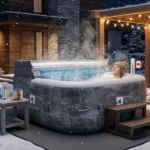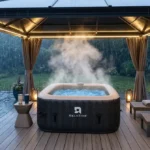
When most people picture a canopy for inflatable hot tub use, they imagine shade on a hot afternoon. In Canada, that’s actually the least of the reasons to consider one. Rain, wind, UV exposure, falling leaves, airborne debris, and the very particular experience of soaking in a snowstorm a hot tub shelter for inflatable tub setups addresses all of these, often simultaneously.
The more useful question isn’t whether you need a canopy. It’s what you need it to do. Canada’s climate varies dramatically from Victoria to Halifax, and the right inflatable hot tub setup and accessories solution looks different depending on where you live and how you use your spa.
What a Hot Tub Canopy Actually Protects Against?
A clear breakdown of the elements and conditions a hot tub canopy helps protect you from, including sun, rain, wind, and debris.
Weather Rain, Snow, and Wind
Soaking in light rain can be pleasant. Soaking while heavy rain pelts the water surface, disturbs your jets, and soaks everything around the spa is a different experience entirely. A waterproof canopy for inflatable hot tub outdoor use keeps the experience comfortable regardless of what the sky is doing.
Snow is a more nuanced issue. Many Canadians specifically enjoy the contrast of hot water against cold air and falling snow it’s one of the genuinely unique pleasures of owning an outdoor spa in a cold climate. A canopy preserves that experience while blocking the heavy accumulation that can dump cold water into your spa, disrupt water chemistry, and rapidly drop the surface temperature.
Wind is underappreciated as a heat-loss factor hot tub performance and energy efficiency. Wind chill across an open water surface accelerates evaporation and heat loss significantly. A portable hot tub tent or canopy structure that blocks prevailing winds dramatically reduces how hard your heater works to maintain temperature connecting directly to energy efficiency and running costs.
UV Protection and Sun Exposure
Summer in Canada brings serious UV levels, particularly in the prairie provinces and during peak July and August. Direct UV exposure degrades the PVC and Tritech® materials in inflatable tubs over time, fading colours, weakening seams, and shortening the overall lifespan of the spa.
An inflatable hot tub canopy with UV protection look for UPF 50+ rated canopy fabric blocks the wavelengths that cause this degradation. Your spa lasts longer. Your cover lasts longer. And anyone soaking during daylight hours avoids the kind of sun exposure that makes a relaxing afternoon feel like a mistake the next morning.
Privacy
This one matters more than people admit when they’re first setting up a backyard spa. The novelty of outdoor soaking fades quickly when you realise your neighbours have a direct sightline to your spa from their deck or upstairs windows. A hot tub canopy with curtains or a portable gazebo for inflatable spa setup with side panels turns an exposed patio spot into a genuinely private outdoor room.
For Canadian backyards where properties sit close together common in Toronto, Vancouver, Calgary, and most urban centres the privacy function of a hot tub shelter for inflatable tub is often the deciding factor in whether the spa gets regular use or sits covered and unused.
Can You Use a Hot Tub in the Rain with a Canopy?
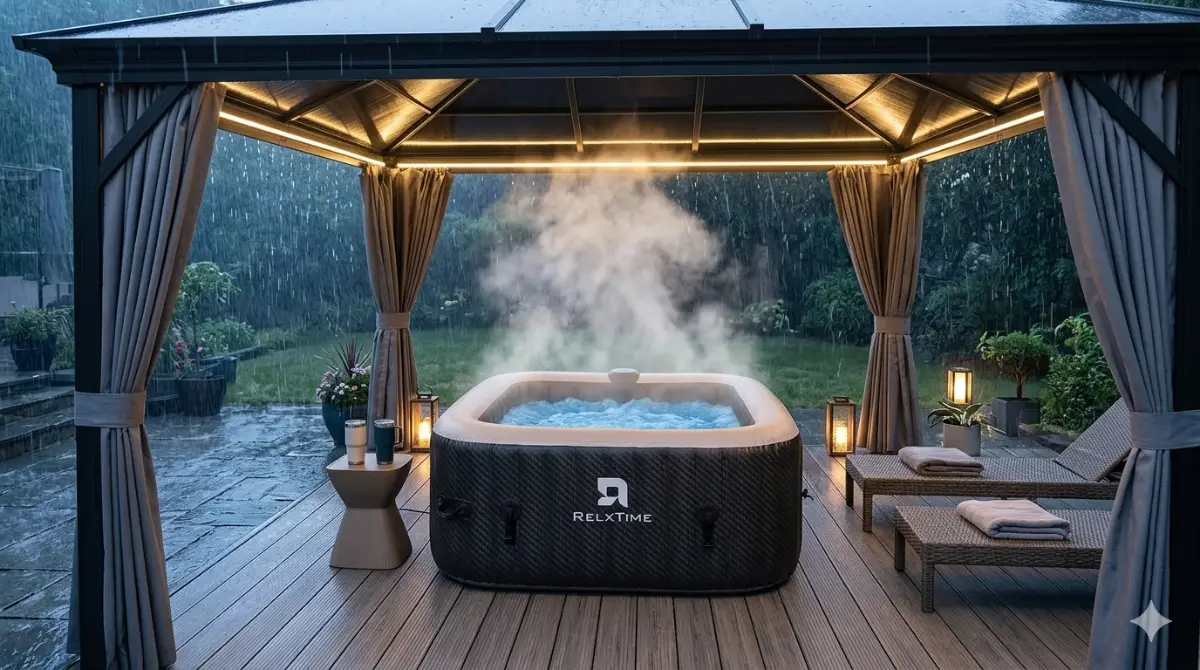
Yes and this is one of the most practical reasons to invest in proper hot tub protection from weather. A quality canopy creates a covered outdoor space that makes your spa genuinely all-season usable, not just fair-weather usable.
The canopy needs to be genuinely waterproof, not just water-resistant. Look for sealed seams, reinforced corners, and a roof pitch steep enough that water runs off rather than pooling. A flat-roof canopy that sags under collected water or snow load is both a structural risk and a functional failure.
Side curtains, if included, should be made from a clear or translucent waterproof material so you retain the sense of outdoor space while blocking wind and rain from the sides. Solid side panels work for privacy but can make the spa feel enclosed in a way that diminishes the outdoor experience.
How to Install a Hot Tub Canopy?
Most easy setup canopy for inflatable hot tub options are designed for assembly without professional help. The general process follows a consistent pattern:
First, choose and prepare a level surface. The canopy legs need to sit on stable ground grass, paving stones, or a deck surface all work, provided it’s level and the anchor points can be secured. Canopy frames on soft ground need either ground stakes or weighted leg bags, especially in wind-prone areas.
The frame typically assembles with push-button connectors or twist-lock poles. Most freestanding hot tub gazebo designs from reputable brands take one to two people about 30 to 60 minutes to fully assemble. If your canopy instructions suggest a four-person crew, that’s usually a sign the design is more complex than a standard portable spa setup warrants.
Position the canopy so the spa fits comfortably inside with clearance around all sides you need room to step in and out, and airflow around the spa is important for the pump and heater to function correctly. Don’t wrap the canopy sides so tightly against the tub that you restrict ventilation around the pump unit.
Secure anchor points every time. Even a moderate wind can catch an unanchored canopy like a sail, and the last thing you want is a frame collapsing onto an inflated spa.
What to Look for in a Durable Outdoor Hot Tub Canopy?
Canada’s climate demands more from outdoor structures than most product specs anticipate. A durable outdoor hot tub canopy for Canadian use should meet these benchmarks:
Frame material. Powder-coated steel or aluminium frames handle the freeze-thaw cycling and moisture exposure of Canadian seasons. Avoid plain steel without coating rust develops quickly and compromises structural integrity. Aluminium is lighter and rust-proof; steel is heavier but more rigid in high wind.
Fabric rating. A minimum of 180g/m² polyester with a PU or PVC waterproof coating handles moderate Canadian conditions. For wetter climates like coastal BC or eastern Canada, 210g/m² or heavier with taped seams is the more reliable choice. UPF 50+ fabric is the standard for meaningful UV protection.
Snow load capacity. This is rarely listed prominently but critically important. A canopy rated for at least 15–20kg of snow load is the baseline for most Canadian regions. Prairie and Atlantic provinces where heavy, wet snow accumulates quickly need a structure at a higher end of this range, or one with a steep enough roof pitch that snow slides off naturally rather than building up.
Wind rating. Look for canopies rated to at least 45–50 km/h sustained wind. Add guy wires and anchor straps in exposed backyard locations regardless of rating.
Conclusion
A canopy for inflatable hot tub use in Canada isn’t a luxury upgrade for most outdoor setups, it’s what makes the difference between a spa you use year-round and one that sits covered for eight months. Weather protection, UV shielding, privacy, and wind blocking all contribute to a better soaking experience and a longer-lasting spa.
At Relxtime, we’ve seen Canadian customers transform their backyard spa setup with the right inflatable hot tub with gazebo configuration turning what could be a seasonal novelty into a genuine part of daily winter life. If you’re setting up outdoors in Canada, a proper canopy deserves to be in the plan from day one.
Frequently Asked Questions?
Here are some frequently asked questions given below:
Do I really need a canopy for my inflatable hot tub in Canada?
For most Canadian outdoor setups, yes. A canopy protects against rain, UV exposure, wind-driven heat loss, and privacy concerns that all affect how often and how comfortably you use your spa. It also protects the spa materials from weather degradation, extending the unit’s lifespan.
Can I use my inflatable hot tub in the rain if I have a canopy?
Yes. A waterproof canopy with sealed seams and a pitched roof keeps the soaking experience comfortable in rain. Make sure side panels or curtains are also water-resistant if you want full protection from wind-driven rain at the sides.
How do I keep my hot tub canopy stable in Canadian winds?
Use all provided ground stakes or anchor points, and add weighted leg bags on softer surfaces. In exposed backyards, add aftermarket guy wire anchors at canopy corners. Never leave a canopy unanchored, even in calm weather.
What size canopy do I need for an inflatable hot tub?
Most 4-person inflatable hot tubs fit comfortably under a 3m x 3m canopy with adequate clearance for entry, exit, and pump ventilation. Measure your spa’s inflated dimensions and add at least 60cm of clearance on each side before selecting a canopy size.
How do I protect my inflatable hot tub canopy from heavy snow?
Choose a canopy with a steep roof pitch so snow slides off naturally, or a frame rated for sufficient snow load. After heavy snowfall, brush accumulated snow from the roof before it compresses and adds structural stress. Avoid leaving a heavily loaded canopy unattended overnight during a snowstorm.