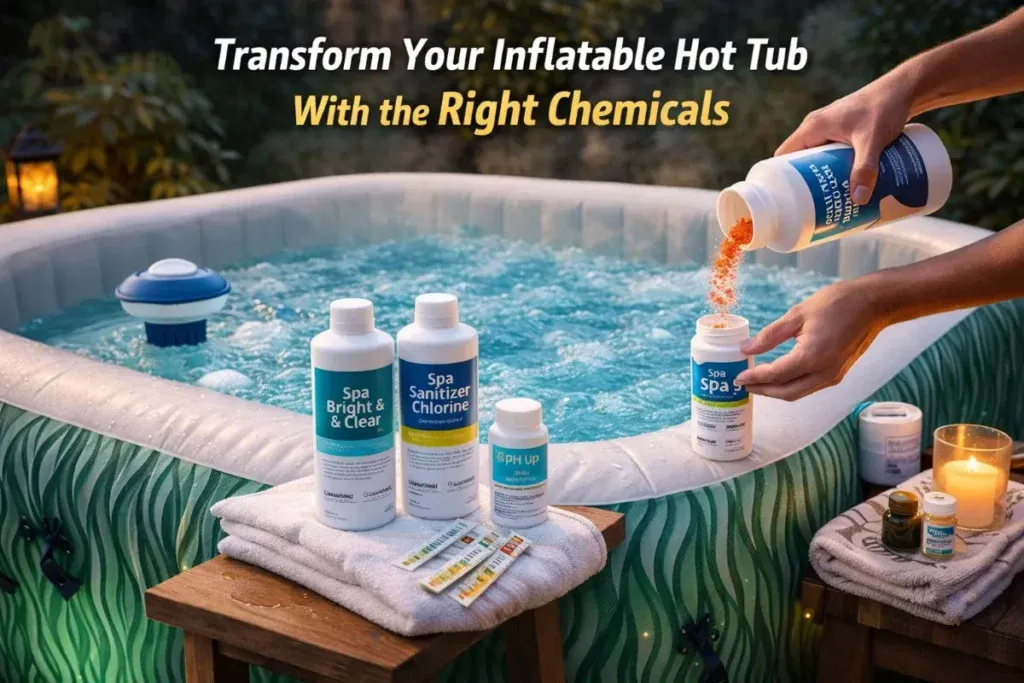
You’re not alone. Water care is very common for new owners of the inflatable hot tubs, and they feel overwhelmed by it all but good inflatable hot tub chemical guide would keep it simpler than you think. Using the critical chemicals for inflatable hot tubs in the proper way keeps your skin safe inflatable hot tub maintenance, helps prolong the life of your spa and allows you can be sure every soak is both hygienic and enjoyable.
This introductory guide to inflatable hot tub chemicals takes you every step of the way from sanitizers, through balancers girding you for a no-splash dive.
Chemicals That Are Most Needed for Inflatable Hot Tubs
Starting out is late in life with the right products. So what should be in every owner’s kit?
| Chemical | Purpose | Recommended Level |
|---|---|---|
| Chlorine or Bromine | Sanitizer kills bacteria | 3–5 ppm (chlorine) |
| pH Increaser/Decreaser | Balances acidity | 7.2–7.8 |
| Total Alkalinity Increaser | Stabilizes pH | 80–120 ppm |
| Calcium Hardness | Prevents corrosion | 100–250 ppm |
| Shock Treatment | Oxidizes contaminants | Once per week |
| Clarifier | Clears cloudy water | As needed |
These are the six hot tub products you need to keep your inflatable spas water sparkling clean. Without them, water rapidly becomes a health hazard and wrecks your tub’s lining and pump system.
How Much Chlorine Should I Use in my Inflatable Hot Tub?
Chlorine is the most common sanitizer, and dosing it correctly is critical. Here’s a simple breakdown:
- Step 1: First fill After filling, add chlorine granules: 3–5 mg/L (ppm)
- Required to maintain 3–5 ppm: Daily test water then add small quantities
- After heavy use: Shock the water with higher dose (10 ppm) and put on hold until it drops before soaking
- Granules vs tablets: Granules dissolve quicker and more effective for smaller inflatable tubs
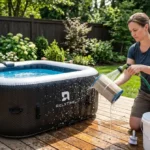
- Do not place chlorine directly onto the tub shell – always pre-dissolve in a bucket of water first
How much chlorine to use in inflatable hot tubs keeps bathers safe from bacteria such as E. coli and algae growth without being an irritant to skin or eyes.
Guide to the pH level for inflatable hot tub
Balanced water has pH as its backbone. When it wanders out of the ideal range, every other chemical becomes less effective.
| pH level | Water condition | Effect |
|---|---|---|
| Below 7.2 | Too acidic | Skin/eye irritation, corrodes lining |
| 7.2–7.8 | Ideal Range | Comfortable, chemicals are effective |
| Above 7.8 | Too alkaline | Cloudy water, scale build-up and poor sanitizer performance |
- Lower pH Use pH Minus (sodium bisulfate)
- pH Plus (sodium carbonate) to increase pH
- For optimal results, always alter alkalinity before pH
- Retest 4–6 hours after any change
Just like always, following a proper inflatable hot tub pH level guide saves you money and doesn’t cost a fortune to keep correcting the chemicals.
Test the Water in Inflatable Hot Tub
Regular testing is non-negotiable. Here’s how to do it right:
- Test strips dip in water 2 seconds water testing accessories, compare color chart; easiest method for beginners
- Liquid test kits – more precise, perfect for weekly deep checks
- Digital testers most accurate, ideal for regular users
Testing schedule:
- Every 2 days for sanitizer and pH
- Weekly for total alkalinity and calcium hardness
- After each heavy use session or rainstorm
Testing inflatable hot tub water regularly is the one habit that makes the biggest difference to keeping your foam-filled bubble bath clean & safe all year round.
Water Treatment for Hot Tubs & Inflatable Spas
Weekly tub-shocking zaps chloramines (those compounds that cause the pungent “chlorine smell”) and reactivates your sanitizer. Clarifier is used in conjunction with shock to group small particles together where your filter can catch them.
- Store non-chlorine shock for oxidizing in the middle of a week without increasing chlorine levels
- If heavily contaminated or after an illness, use chlorine shock
- Use clarifier when water is dull or cloudy
After adding any treatment chemical, always run the pump for 15–20 minutes.
FAQs
Here are some frequently asked questions given below:
Can I use regular pool chlorine in my inflatable hot tub?
Yes, but go with granular chlorine made for hot tubs pool tabs release chlorine too slowly and can bleach your tub’s vinyl lining.
How regularly do I need to refresh the water for my inflatable hot tub?
Every 1–3 months based on use as dissolved solids accumulate over time and the chemicals are less effective even if doses increase.
What does it mean if my alkalinity is low?
If the alkalinity is low, pH will bounce all over the place, making the water corrosive and impossible to balance add an alkalinity increaser then retest before changing pH.
How soon after adding chemicals can I go in the hot tub?
Wait 20–30 minutes after putting chemicals in the water and retest levels before soaking to ensure they’re safe.
Conclusion
If you feel an inflatable hot tub is suitable for your use, keep monitoring it with those simple steps. At the right essential chemicals for inflatable hot tubs, with regular tests and an easy weekly routine, you can enjoy clean, safe and well-balanced water every time you soak. Understanding your inflatable hot tub chemical guide from sanitizing and shocking, to pH balancing, this process is effortless for all experience levels.
The secret is to be consistent, not reactive, so that minor tweaks prevent problems from ever arising. Today, use the proper chemicals for your inflatable hot tub and see how water care as an aspect of your every relaxing soak makes all the difference.